Review: Fighting With My Family (2019)

Family, identity, and dreams serve as the central theme of this WWE biopic. Paige and her brother Zak have been raised in a wrestling family, and the two gain a rare chance to try out for the WWE. Paige gets in – Zak does not. As Paige becomes overwhelmed with this new world, Zak appears to be falling down a similar path as his older brother, who ended up in prison after failing at this same goal.

There’s not much to this as a work of cinema – this is the standard modern Hollywood-style biopic. It finds a strong central story with a heartfelt message, competent but not pushing any technical boundaries. The camera is here simply to tell the story and nothing more.

A film with such basic features is going to be limited in its impact, having to be carried almost entirely on the back of its narrative. Luckily, I feel confident in saying that this does have a fairly effective story – despite having next to no interest in wrestling as entertainment, I found myself caught up in the emotions. It finds universal sticking points in its tale of underdogs and ‘failure.’

The other key element of the standard biopic is acting; the central actors here all fit well in their roles, though no one gives anything particularly award-worthy. This film runs on familial interactions, and they do well enough while playing against each other – it’s just hard to do much with such a familiar narrative.

I feel like I keep highlighting the cliches – but I don’t think they’re all that distracting. Despite its simplicity, I truly was engrossed by what was happening. A bitter ring fight between Zak and Paige as she briefly returns home really highlights the wedge driven between them by her success. There’s this constant return to coping – how do you manage dreams that you have been raised on when bluntly told you won’t be allowed in?

There’s a similar focus on who belongs where – we are in on Paige’s side from the beginning, but she is treated as an outcast. We are initially taught to look down on her fellow competitors due to their origins; models, cheerleaders, women who look pretty in the outfit but have never stepped in the ring before. After all, few women are actually raised wrestling. But this underdog story takes a deeper look – Paige is called out for her condescending attitude. She learns nothing of these women, but they all have their own story to tell. In fact, Paige truly appears to be the underdog in every sense, even falling behind on physical training. The film never takes the easy path, insisting on painting everyone in a sympathetic light – in the end, everyone feels like the underdog until they succeed.

Despite being as basic as films come, Fighting With My Family is an entirely competent work with an engaging narrative. While its central focus is on a violent sport, it comes off as an entirely well-meaning and optimistic work. Not everyone will be successful in achieving their dreams – but there is more to life than dreams.

3.5 Stars Out of 5

Review: The Wandering Earth (2019)

Wandering Earth is currently the best-selling movie of 2019 – but you probably haven’t heard of it. The box office intake is almost entirely centralized to China itself – but due to the size of that market alone, it has become the second-most successful foreign language film of all time. Wandering Earth is part of an increasingly successful, yet self-contained, mainstream Chinese cinema.

This is noted as the first successful Chinese sci-fi blockbuster – but that doesn’t really mean much for artistic value. This film runs off pure, dumb energy like any other generic sci-fi spectacle piece – it simply happens to be Chinese this time.

Wandering Earth is absurd in its scope. The sun is beginning to enter the red giant phase, and our collective solution is to attach thrusters and push the entire planet somewhere else. Along the way, we attempt to use Jupiter’s gravitational pull to slingshot us through space, but there’s naturally a miscalculation that puts the planet on a direct trajectory into disintegrative doom.

In other words, this leans more on the fiction than the science.

The film bounces between two locations. Astronaut Liu Peiqiang is aboard a space station that guides the planet, soon finding himself in combination 2001Gravity land as he must dodge space debris and confront a killer A.I. Meanwhile, his family on Earth gets caught up in a rescue mission, which falls hard into the epic disaster genre, specifically recalling The Day After Tomorrow with its frozen metropolises. These bits are all painfully familiar, and I can’t decide whether it’s more rip-off or an attempt at pastiche for China’s first project of this scale.

Despite its rather lacking scientific basis, Wandering Earth sure enjoys spending a lot of time trying to make sense of everything. Like Alita, this is a film that gets sidetracked explaining concepts that really don’t matter for its purpose. There are a few cool moments that would hopefully balance things out, but where Alita has a director who at least understands raw action spectacle, there’s not enough here. The only truly stand-out imagery from this film comes in the form of shots of Earth as it is pushed through space by its thousands of blue jets, leaving a trail in its wake.

The central concept is too nonsensical to really drive itself, and the characters are also lacking. Liu Peiqiang and his son Liu Qi have been separated for seventeen years, and their drive to reunite seems to serve as a central personal conflict. Qi is angry for a variety of reasons, but it all seems so shallow when the world itself is on the verge of evaporation. Qi has his grandfather and an adoptive sister along for the ride, but neither offer much besides familial relations – an idea that frequently pops up throughout the film as government propaganda encourages people to spend their last moments alive with their loved ones.

They are surrounded by characters who don’t do much but die – I get the feeling they were going for the group protagonist angle as typical of films from countries that try to push communist themes, but it makes for a rather bland cinematic experience. The one side character who stands out in any meaningful way is Tim, an Australian-Chinese man who serves as comic relief…who is implied to be a rapist. For comedic purposes.

If you’ve been eagerly awaiting the day where even more countries push out works like 2012 and The Day After Tomorrow, then Wandering Earth must be an exciting prospect. But all this really represents is a country with a big enough economy and population that it can create its own insular Hollywood – it will take a certain amount of time before they can push out a truly unique and international success. It’s a Hollywood disaster flick with a Chinese flavor – there might be some cultural differences in its message, but it’s not competent enough to really be saying much at all.

2 Stars Out of 5

Review: Cold War (2018)

Pawel Pawlikowski’s Cold War is a study of life in post-war Poland, following two lovers who would never fit in among the communist society that formed. This is romance at its extremes, two self-destructive people trapped inside a brutal machine.

Cold War runs largely off the vibrancy of its characters. The story starts with Wiktor Warski recruiting peasants for a folk music project. He becomes immediately enamored with Zula, a beautiful young woman who begins by attempting to ride the coattails of a more vocally-talented woman and is soon exposed as a city girl. Despite this, Wiktor casts her and they begin an increasingly desperate love affair.

The narrative structure is straightforward, its cruelty all the more palpable due to the simplicity. There’s so much at play here – two artists restricted in their freedom to create, but increasingly difficult to cheer on as more inner flaws are exposed. Cold War plays with our ability to sympathize.

What really sells Cold War as an important film is its stunning black and white cinematography, framed in a square ratio as if to announce that this is indeed an art film. Each image feels as if it could have fallen out of some old photo album. Pawlikowski has a tendency to allow his central images to sit just off-center, drawing our attention to the full picture. He’s dedicated to a conspicuous lack of symmetry.

There’s something disconcertingly fatalistic about the film, which holds a certain power but might not have landed with me as intended. Perhaps I lack the cynicism to be snared by its message – Cold War hits like the bleakest kind of Bergman movie. But walking disasters like these characters certainly exist – this is a film that seems to lack personal resonance despite carrying all the signifiers of a great work of art.

But with a title like Cold War, I suspect that feeling is intentional. The concept of giving up on everything but a single person should leave us cold. They are relatable and not – I’m sure many people have experienced a love that might have bordered on obsession at some point, but to carry it as far as Wiktor and Zula is madness.

Cold War is undeniably a well-crafted film. The actors, the cinematography, the staging, the sound – from a formalistic perspective, this is easily one of the most impressive films of 2018. It never wastes time, saying so much in less than 90 minutes. Its design is purely mechanical – cold.

But I’m wrong to suggest this movie is entirely cold – it’s filled with the fire of passion. In fact, I think contradictions are a key element of this film. People madly in love go out of their way to harm each other while beautiful camerawork lingers on dirty scenes – this is love framed against rubble. Perhaps this is less about love and more about trying to find something, anything to be passionate about in a world where expression is limited and constantly surveyed.

To put it plainly, I walked away from Cold War not knowing what to make of it – though its narrative was succinct, the meaning behind it is layered. These are the films that carry a lasting impact, and I’m certain this will be a work I look back on in a year with a stronger perspective. I’m already eager to revisit it, which is a rare state for me. But at this current moment, I can only say it’s a beautiful film that didn’t resonate quite enough to hit me now.

4 Stars Out of 5

Review: How to Train Your Dragon: The Hidden World (2019)

The third film in the How to Train Your Dragon franchise, The Hidden World captures a lot of what made the first two movies the best animated films out of Dreamworks this decade. But is retreading the same ground enough to make this a good film in its own right?

My praise for The Hidden World would be very similar to that of the previous films – firstly, the animation is phenomenal. The series pushes more realistic character designs while maintaining a cartoonish charm, avoiding the uncanny and offering dozens of stunning sights. Each character has their own distinct design, yet they fit perfectly side by side. The Hidden World‘s greatest strength over its predecessors is five years of visual evolution.

What’s always striking about this series (and DeBlois’s earlier Lilo and Stitch) is how it manages to capture character among non-human figures – a ton of effort is poured into getting Toothless’s animations just right, giving him perhaps the most vibrancy of any character despite an inability to speak.

A central focus of this movie is Toothless meeting a female member of his species that the humans nickname Light Fury. A great scene on the beach finds Toothless attempting to woo her, invoking childish moves and odd Birds of Paradise-inspired dances. These details establish Toothless as an awkward young adult much like Hiccup.

Which, the relationship between Hiccup and Toothless is the guiding force of the series – and I’d say this is where The Hidden World falters a bit. The film does reach similar emotional heights to the first two entries, but a lot is saved for the ending.

Where the first two films speak of learning the language of a supposed enemy and coexistence, The Hidden World deals with separation. Hiccup and Toothless have formed an almost symbiotic relationship over the series, but The Hidden World gives Toothless his own personal pursuits. While this provides a strong inner conflict for Hiccup, it disrupts the screen time between the leads.

Where The Hidden World is a largely satisfying conclusion to a trilogy, its central conflict doesn’t do enough do raise the stakes from the previous. The villain is largely forgettable and is notably less threatening, and most of the characters lack an arc or real development – despite the distinct designs, the side characters offer little but comic relief. This is an excuse to revisit the familiar more than being an expansion on the lore.

Luckily, this is a world worth revisiting. For those invested in the series, it will hit you hard at key moments. Despite being about mythical creatures, How to Train Your Dragon has always felt like the story of a boy and his dog. The Hidden World pushes past that, instead paralleling old friends who you know someday will go their own way. Toothless is never subservient but an equal, and this entry explores what that means as the two enter maturity.

As such, The Hidden World is a stellar conclusion to a great series, but one that doesn’t quite have as much impact on its own. The narrative beats land a bit flat during the second act, but this is balanced out with quieter stakes from the earlier installments. How much you get from this depends entirely on how invested you are in the series as a whole.

3.5 Stars Out of 5

Review: Alita: Battle Angel (2019)

Alita: Battle Angel is a tale of an abandoned cyborg returned to life without her memories, finding herself in a ruined world beneath a floating city. It’s got all the features of a major studio blockbuster – big action sequences, a vibrant future noir world, an obligatory romance.

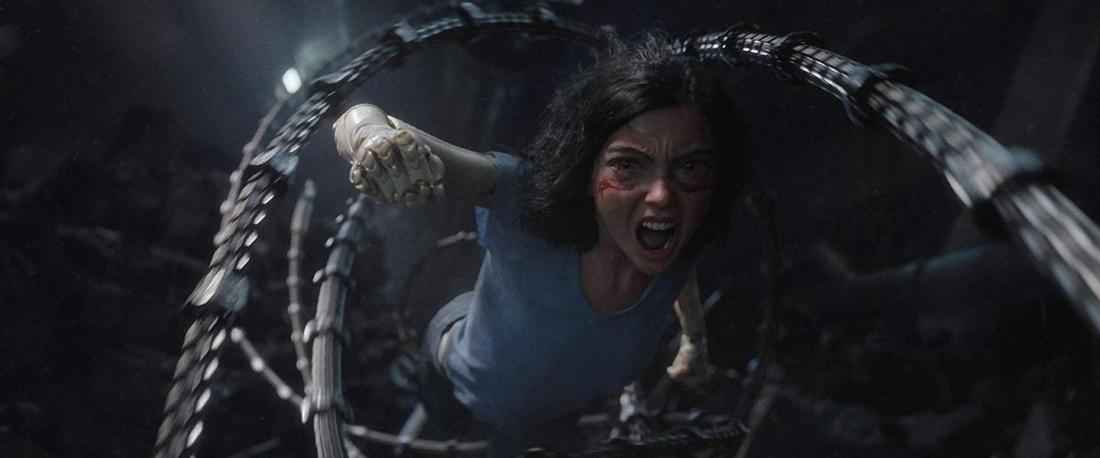
After months of staring this trailer down, I feel like I have to look it in the eye. It’s the most jarring detail, something painfully discomforting to look at. But where it turned me away from the film in the trailers, it works in the full context – it’s an intentional invocation of the uncanny valley, immediately marking Alita as out of place.

Alita: Battle Angel comes off as a film not certain of what it wants to be – it’s everything and nothing at once. Throughout the opening act, it sets itself up as if it’s going to be this classic dystopian tale with deep lore – and it really wants us to learn this lore, as the entire opening feels like nothing but exposition. But this doesn’t go anywhere – the dialogue is largely amateur, the elements of the world stale. There’s no attempt at any meaningful philosophical pondering, so why waste our time acting like there’s some grander concept at play?

Tacked onto this is a familiar love story, a young woman new to the world falling for the first young man who introduces her to it. There’s no meaningful chemistry between the two, but despite this failure, the film at least uses these moments to explore Alita as a character outside of the initial wonder and the later warrior.

After wasting our time with themes it doesn’t actually want to explore, Alita picks up the pace during the action sequences. This film is really dumb, and it’s at its best whenever it embraces that fact. It’s brutally violent and visually chaotic – that is what Rodriguez knows how to do. It’s a shame so many action directors feel a need to justify these battles – this film could have trimmed quite a bit of fat and been a much more engaging experience if it just dropped some of the political intrigue.

The one redeeming element of the narrative is Alita herself – this is a character who finds her own story, has passion and energy. These elements aren’t limited to her seeking out fights – her curiosity seems genuine, and her evolution as she begins to understand the world is largely successful. She’s alien in the right ways, making extreme gestures that are believably not as extreme from her cyborg perspective. All of this adds up to an ideal action protagonist, someone who carries the plot instead of being pushed along.

The worst part about this movie is that it ends – specifically, that it ends way before it actually ends. This is apparently going to be a story in multiple parts, as the conflict the movie keeps building toward doesn’t actually happen within the film. I felt blindsided by the credit roll – was their goal to leave the audience as immediately underwhelmed as possible? The film doesn’t do enough to leave me wanting to dive back into the narrative of this world – I just wanted a cool closing action sequence.

But the fact I wanted that means there’s some success – this is a movie that got better as it went on, to the point I must have been invested by the end. Between the lead character and the visual design, a sequel could turn out a lot better since it gets to skip over the set-up.

All in all, Alita: Battle Angel perfectly encapsulates the styles of both Rodriguez and James Cameron. There’s chaotic violence, a bold new world…and a consistently fumbled plot. If you can tolerate the sometimes maddening narrative, you’ll be rewarded with some truly fun action sequences.

3 Stars Out of 5

Review: Fyre (2019)

The failure of the Fyre Festival was one of those spectacular social media events, a cavalcade of schadenfreude as we collectively laughed as rich kids overreacted to a bad vacation. It was symbolic of issues within social media, an event carried entirely by hype and no outside oversight, sold through ‘influencers,’ with no one questioning who was running it and if they had ever done something similar before. Fyre dives into the background details, pinpointing the people involved and why it went wrong.

Being a documentary about recent events that are still tangled in legal issues and interviewing people who may or may not be culpable, Fyre is a film that needs to be met with heavy scrutiny – who is making this and what are they trying to say? If you went purely off this documentary as presented, everything seems to fall on CEO Billy McFarland, that rich white frat bro-type seemingly designed to be hated. He obviously is a central negative force – but an event this big has several people involved, and no one seemed to do anything meaningful to prevent the disaster from being fully realized. There was no excuse to allow people to actually arrive at the festival grounds.

What Fyre fails to meaningfully establish is that this was a scam created by rich people targeting rich people. The documentary casually introduces attendees, and they are never questioned. Who are these people that are willing to drop thousands of dollars on a festival without first making sure it was the real thing – especially one occurring in 2017 with Blink-182 as a headliner? These aren’t sympathetic figures, but Fyre is happy to drop successful venture capitalists in front of us and act like they’re everyday victims.

As long as you go in with a critical mind, Fyre does a pretty good job establishing what allowed this to happen – even if some people might be covering their own tails, there are solid elements being discussed, like how they managed such expert marketing and the struggles of attempting to put together a big event in such a short time. There were promises of something that had never been done before, with no one thinking to ask why it hadn’t been done before. This was a concept being sold as a finished product. There’s quite a bit of fun in seeing people who can usually buy their way out of every problem running into something that no amount of money can fix.

The film is at its strongest when it exposes the actual victims at the heart of the matter – as in people who were actually harmed by the festival. Interviews with the locals who did the actual ground work are depressing, people promised something meaningful for their community and then abandoned without pay. This would be a stronger documentary if they gave this subject more time – but Fyre seems to want to run off the more absurd elements.

The Fyre Festival is certainly an event worthy of a cinematic exploration, but this film is coming at a time where it allows certain people to save face – it’s hard to view it as a meaningful statement until the dust settles. It’s certainly a fun subject matter presented fashionably, but the film itself is teaching us not to trust presentations simply because they have a slick presentation. A fuller truth will be revealed in time – but this is a fair summary as we have it today.

3 Stars Out of 5

Review: Cold Pursuit (2019)

It would be nice to live in a world where a beat-by-beat remake of a relatively recent foreign film wasn’t seen as a viable pursuit – what a world it would be if people would simply go out and see the original. Though I can’t entirely blame them here, for I had never heard of the original until now (nor did I hear of this film until planning my weekly theater visit, but that’s another matter entirely).

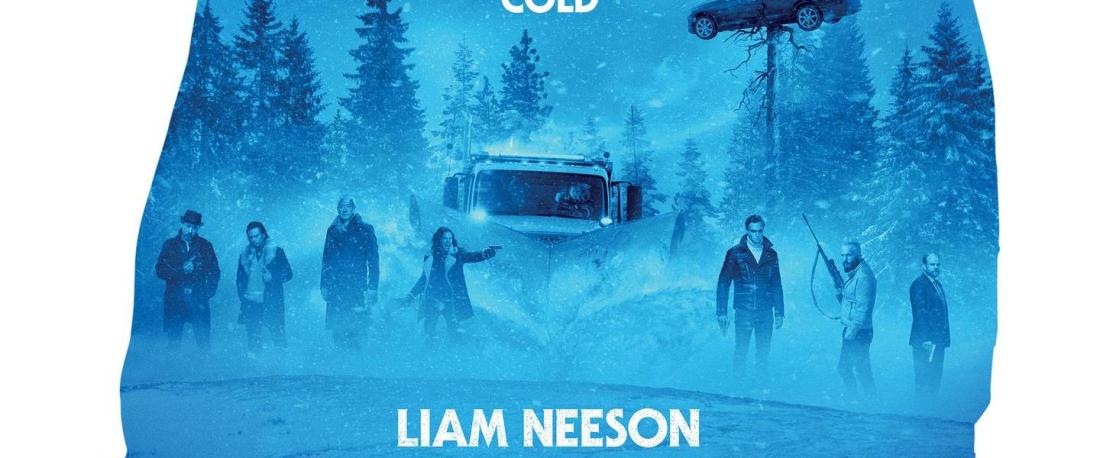
Cold Pursuit follows Nelson Coxman (Liam Neeson) as he seeks out bloody revenge for the suspicious death of his son, soon finding himself caught up in a turf war between Trevor Calcote (Tom Bateman) and White Bull (Tom Jackson), two rival drug lords. Dozens of lackeys enter and exit the picture quicker than you can count, making small marks before violent deaths.

Cold Pursuit doesn’t feel extraneous purely due to its status as a remake – nearly every element is familiar. The film feels lifted straight from the 90s, echoing the darkly cynical humor of Tarantino and the Coen Brothers and their usual convoluted mess of characters. And while the snow drenched setting simply makes sense for a Norwegian film, the unfortunate fact is that moving this same narrative to America sets this movie up to be compared to the far better Fargo.

The element most miss while attempting to mimic Tarantino is that he carries a certain wit that justifies his violence; there’s a contrast between the mundanity of his conversations and the violence that soon follows. There’s no subtlety here – the villains are either total cartoons or bland stereotypes.

Trevor “Viking” Calcote is simply an awful villain, which makes a plot driven by revenge against him hard to invest in. His personality seems to consist of nothing but negative traits; he’s a controlling father, abusive, kills indiscriminately. There’s no attempt at humanization, laughable but not in the way most comedies are striving for. Tom Bateman goes completely over-the-top in the role – it feels as if the whole character was an attempt at some sort of meta-commentary on revenge flick villains, but he’s so laughable and surface-level that it doesn’t suggest anything but poor writing.

Liam Neeson does a passable job as Nels, but I never felt invested in his character arc. We know some facts of his life – recent “Citizen of the Year” recipient, snowplow driver, quiet life on the edge of a resort town. But his actual connections are underutilized – the son dies right at the beginning and his wife leaves soon after (Laura Dern serving in the wasted role). He’s the archetypal man with nothing to lose – and therefore nothing for us as an audience to care about.

The most intriguing element lacks the weight it needs. The seemingly endless henchmen get their own minor plots before being unceremoniously killed off, and if the movie just honed in more on a few, there could have been something there. Instead, everything is a cheap joke – a secret gay love affair here, a disgusting hotel habit there. Cold Pursuit has ideations of being an ensemble piece but every character is either flat or absurd.

Cold Pursuit wants to be a satire of the traditional Liam Neeson-style revenge flick, but its humor is too juvenile and its actual conflict too bare-bones to succeed. It’s a mess of violence without meaning – it almost seems to forget what the string of killing is about after a certain point. Revenge served cold does not imply burying it so far back in the freezer that even the audience forgets why it’s there.

2 Stars Out of 5

Review: The Lego Movie 2: The Second Part (2019)

The original Lego Movie was a surprise success, mixing together a popular but plot-less brand of toys and several pop culture references to somehow create a film about creativity among conformity. It worked at a level above its initial premise – no one quite expected it to be as effective as it turned out.

A problem with sequels is that they are sometimes simply more of the same, which can be especially problematic in a franchise that started with a film about rebelling against the status quo. The Lego Movie had to prove itself in a world where toy-based properties are rightfully questioned – it’s important to draw the line between an artistic production and glorified advertising. Now that the franchise has secured its place, The Second Part appears happy to fall into a now-familiar groove.

The premise is fairly straightforward, with a few necessary twists and turns – the world of the first movie is met with cataclysm after the daughter of the human family is allowed access to the Legos. Emmet, voiced by Chris Pratt, must rescue his kidnapped friends from alien invaders. During his journey, he meets Rex Dangervest (also voiced by Chris Pratt), who teaches Emmet a few new ways to interact with the world beyond simply creating. Lucy (Elizabeth Banks), one of the kidnapped citizens, tries to fend off the invaders while watching her friends fall easily under their spell – the obviously evil Queen Watevra Wa-Nabi (Tiffany Haddish) is delightfully charming in how blatant her manipulations are. Where the first film had order, the second carries chaos.

Though the film is a bit too familiar, the style holds up well enough to make this a worthwhile viewing. Scenes have a smooth flow and it playfully jumps in and out of various visual styles. There’s always something to catch the eye, though rarely the mind. There are plenty of decent jokes to go around, but nothing coheres to make an overall memorable experience – this is more a collection of fun moments than a centralized narrative force.

There’s an issue with the movie feeling too on-the-nose, from its humor to the narrative structure. The pop culture references tend toward the obvious, such as Rex Dangervest’s backstory simply being an amalgamation of every other Chris Pratt role. This particular joke seems to exist largely to draw our attention to the fact that Rex shares a voice with the protagonist – which, again, is a detail treated a little too obviously. The film is also dotted with live action shots that keep reestablishing that, yes, this whole affair is representative of a brother and sister fighting over toys. The messages are simplistic; siblings should learn to understand each other, and also sometimes things aren’t awesome.

Despite its poor handling of some big picture matters, The Lego Movie 2 succeeds at its individual moments. Rex offers up a good foil, his cartoonish edginess playing against Emmet’s infallible optimism. The best the film has to offer comes largely through Queen Watevra, a playfully meta character that is also connected to most of the musical numbers. The music throughout is incredibly fun, from the obvious villain song “Not Evil” to the aptly titled “Catchy Song” and the necessary “Everything’s Not Awesome.”

The Lego Movie 2: The Second Part is perhaps best compared to the over-produced pop songs it evokes – it’s designed to convey a certain light, accessible image, to be easily consumed by whoever comes in contact. These works don’t intrinsically lack value, but great art challenges to some capacity. The original film had the concept of originality to give it a necessary edge – the sequel doesn’t have a clear purpose beyond being a follow-up to a box office smash.

In the end, I kept finding myself comparing this film to another sequel starring Chris Pratt – much like the second Guardians of the Galaxy, this second Lego Movie simply feels like more of the same. The originals were both films I truly enjoyed and wanted to see more of, and I can be happy with what I ended up getting. But to make a great sequel, you can’t simply repeat but must also build upon the foundation – and of all franchises, shouldn’t Lego be aware of the need to build?

3 Stars Out of 5

Review: Shoplifters (2018)

Shoplifters is only my third film from director Hirokazu Kore-eda, but based off of this in combination with Nobody Knows, I am convinced he has proven himself one of the most capable masters of tackling life in poverty.

A makeshift family comes together and navigates life; Osamu acts as the father of the family, teaching young Shota how to shoplift. The wife Nobuyo works with laundry, stealing whatever trinkets she can find forgotten in pockets. Elderly Hatsue acts as the matriarch, collecting pensions and running scams, while Aki works at a hostess club. One day, as Osamu and Shota return home, they come across a neglected young girl and end up bringing her into their family, rescuing her from abuse but legally kidnapping her.

Kore-eda balances this tale in such a way that we are fully engaged with their struggle to survive while keeping us at enough distance to question who these people are. Their connections are blurred, to the audience and even each other. They operate as a family, living together and having each other’s backs, but they rarely allow the others into their internal struggles. Kore-eda knows to let questions linger, adding an air of mystery to an otherwise straightforward tale.

The subject matter feels like the perfect topic for a slow cinema film, and it carries the painterly aesthetic of that movement, but Shoplifters is anything but slow. All six members have their own poignant tales, bringing life into each scene. This is not a tale of people wallowing in misery, but rather finding beauty in the most surprising places.

The central theme of Shoplifters is the concept of what makes a family. Is it simply biological, or does it really consist of the people who care for you? This question appears to have its most obvious answer in the little girl, Yuri, who finds safety in this new home. But Kore-eda knows it’s not that simple – as Osamu and Nobuyo observe, they feel like broken people, and what do they truly have to offer? They give love and their own warped sense of care, but they can’t offer a brighter future or security.

Shoplifters exists in a similar visual realm to Ozu films; the central focus is framing. Kore-eda perfectly considers the boundary of the image, where each object is placed, crafting a vibrant visual landscape even in desperate settings. A particularly standout sequence finds Aki performing at work; the way her schoolgirl outfit clashes with the usual imagery, the patron writing on a white board to communicate as he sits obscured in near-total darkness on the other side of glass, the surprisingly touching moment they share as they go back for a direct session. Every shot carries obvious consideration.

That brief moment between Aki and her guest perfectly captures the heart of the film – as broken as people can feel they are, there’s something magnificent about how they can come together, understand one another. Certain directors make similar films and get derided for making ‘poverty porn,’ as if they are simply exploiting the poor for the entertainment of the better off. But there’s no sense of exploitation here – this is an honest tale of fully-realized characters, as true-to-life as it can be. This is not a study of poverty but a celebration of life itself told through the eyes of some of its most vulnerable people.

Works as compellingly mundane as Shoplifters are a rare treat. Kore-eda never comes off as simply trying to spread a message; this film is a consideration. He wants us to ponder our own connections, how we view the world. Whenever an easy answer seems to bubble up, Kore-eda squashes it back down, culminating in a harrowing finale. Kore-eda never offers us answers, but rather gives us questions we rarely think to ask.

4.5 Stars Out of 5

Review: They Shall Not Grow Old (2018)

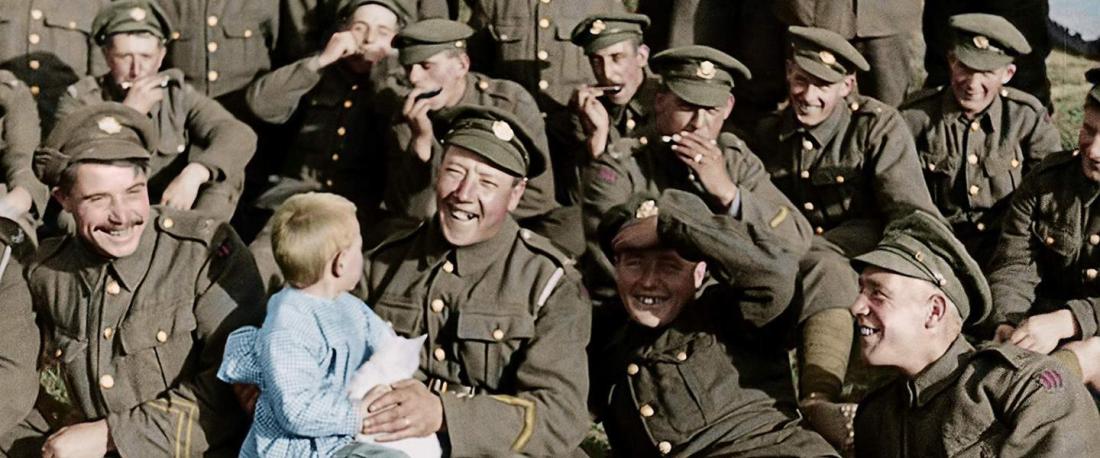
Peter Jackson has put together a World War I documentary consisting purely of archival footage and other media from the era, reconstructed and colorized with modern film technology. It is both a testament to what can be done in the name of film preservation (and beyond) and a richly visceral dive into the Great War.

They Shall Not Grow Old is a sensory experience; it doesn’t cover new ground as much as it attempts to make you feel. In a way, it is a fantasy upon itself – so much is crafted through guesswork. Improvements upon the clarity of the image are always welcome, and I feel like that’s the place a lot of preservationists would stop. Peter Jackson goes several steps further – adding color, mixing in imagined sound. It creates a more immediate resonance, but also adds a layer of artifice – the addition of people voicing the soldiers in the footage felt especially jarring to me.

The most effective moments of the film come from a more simple element; it’s the way in which Jackson mixes the footage with post-war interviews. Soldiers recount tales of their experience, Jackson jumping between unrelated interviews until he crafts a more general view of the war experience – this is a glimpse of the war from the ground level, the daily lives of those who fought in it. The overall narrative design is sometimes simplistic but always carries such incredible force.

Even with the rather wide scope of the film, the best moments come down to specificity. A rather gross yet memorable sequence discusses the lack of toilets and the simplistic systems used in their place – one soldier recounts a time where a group of soldiers fell off the pole they were sitting on into the pit below. A more disturbing moment comes not from the combat directly but the state of the trenches – a soldier describes watching a young man slowly drown in the mud, no one really able to reach out and help.

They Shall Not Grow Old exists in this weird state of contradiction. As a documentary it seeks to expose the truth, but then it modifies the truth it has to be more presentable to a modern audience. It is likewise composed of individual memories, strung together until the voices of these individual soldiers become lost in the crowd – in a way, this film shares a lot with the collectivist storytelling of early Soviet cinema.

The question I keep returning to is, what is the purpose? Is it simply to give World War I a wider reach? It’s certainly a harrowing topic, but even with all the modernized footage, it’s the voices of the soldiers that leave the most impact. Were their words not enough to convey the horror?

They Shall Not Grow Old is an impressive technical feat, a journey into how far cinematic technology has come – but it also comes off more as a document than a great work of art. Pieces that already existed are cast in a new light; its mere existence has value, but it is also limited by its goal. The version I saw had an introduction by Peter Jackson, where he discusses being approached for the project; a hundred years later, what new meaning could be brought out of this old footage?

I don’t think anything particularly new was found – however, Jackson has constructed the perfect entry point for people unfamiliar with the war, the type of film I can see serving an honorable purpose in classrooms across the world. With the materials provided and the intended goal of the project, I can’t imagine anyone doing a better job than Jackson did here.

4 Stars Out of 5