Review: Green Book (2018)

Green Book is a film that immediately sparks the phrase ‘Oscar-bait,’ this concept that some films are created more for award ceremonies than critical appeal; the idea here being that the average moviegoer is more likely to check out a Best Picture nominee than a film that manages to land a high score on Metacritic. The negative quality of this label comes from the general attitude that technical elements can be ignored for more surface-level details – a narrative with ‘social significance’ and recognizable actors giving ‘meaningful’ performances. These films carry a certain air of manipulation, that they care more about what the subject matter can do for them than the other way around.

Yes, Green Book falls neatly into that category. This is a Hollywood take on the concept of an art film. The importance is on the label, the story of a working class white man driving a black musician through the Deep South in the early 1960s – and though they are wildly different people, they learn Important Life Lessons during their journey together. It’s the type of saccharine story about race that will earn nominations over more purposeful and heavy takes on the issue, such as the snubbed If Beale Street Could Talk.

But being Oscar-bait is a conceptual idea; films can rise above that label. For the story it’s choosing to tell, Green Book does fine work. As mentioned, this style of film-making puts emphasis on acting, and it’s much harder to fudge a good performance than it is to force a ‘meaningful’ narrative. Viggo Mortenson and Mahershala Ali are stellar playing against each other, Viggo’s loudmouth Tony in perfect contrast to Ali’s deliberate quiet as Don Shirley.

What pushes this above standard Oscar-bait territory is that it actually does excel in a particular technical category; the editing is surprisingly proficient. There’s nothing boundary-pushing, just a simple emphasis on timing; this film carries a certain comedic tone, and it has that necessary rhythm between shots. Nothing lingers more than it needs to, nor does a shot fade away too quickly – this is a film that earns its two-hour-plus running time by making every moment count.

The story is nice enough, though it naturally feels a bit forced. There are two major themes running throughout, and the one beneath the surface works a whole lot better. There are too many scenes that simply establish Don Shirley’s lack of connection with other black people. One flagrant example finds him standing outside the car after it break down, a field full of black workers staring at him in his fancy suit as a white man chauffeurs him. This element of the narrative is present throughout, so why feature such a deliberate moment?

What works better is when the film hones in on the concept of self-hood. Don Shirley is portrayed as a man lost in his individuality, performing for audiences that otherwise treat him as scum. His unique place in the world puts a barrier between him and others, a lonely man compelled to present that loneliness as an affectation. Tony Vallelonga, on the other hand, is happy to fall into the ways of his community, but he always sees through whatever stereotypes he might fit to see himself as his own being. But where this creates fun moments of conflict between the two, it also carries the heavy baggage of making this a film about a white man teaching a black man to lighten up a little.

Green Book is all-in-all a fine film, one that can’t hide its intentions but carries a high enough quality to make it worthwhile. It certainly has no place in the Best Picture race, and I think the sad fact is that it could have even been a great film if it cut down on some of the surface-level elements that likely earned it that nomination. It could have been great – but it’s still pretty good, which I can say is more than I expected when I went in.

3.5 Stars Out of 5

Review: The Kid Who Would Be King (2019)

A full eight years since the release of Attack the Block, Joe Cornish returns with his second feature film. A modernized tale of Arthurian legend, The Kid Who Would Be King is a fair but rudimentary family movie.

Though his two films target wildly different audiences, they share the common theme of youth facing off against evil forces without much outside help; one happens to feature aliens while the other has demonic knights. However, the kids here simply aren’t as compelling. Attack the Block was as much about troubled youth as it was an alien invasion, but this film is fine resting on the generic; poor parental relationships, the bullied, the bullies. The characters are largely conceptual – they go through obvious arcs and don’t perform much beyond their archetype.

Many of the plot beats feel equally forced, from the discovery of the sword to how the two bullies get tangled into the story. I couldn’t help but find those two characters out of place through most of the movie; they seem to be there just so the film can deliver a message. This is a story that wants to be about growing and learning to understand and care for others – but the characters succeed too easily.

The Kid Who Would Be King felt rushed during its first act, only to drag during its back half. Certain sequences from the beginning could have been milked for more; Alex too quickly falls into the hero role, and the film could have used more scenes with the young Merlin completely failing to hide among the student body. Simply establishing the characters more before sending them off on the quest could have done wonders.

And where it races through these promising concepts, it then slows during the rather mundane journey. So much of the film is just a group of kids travelling; by foot, by horseback, through knee-deep water. It carries the ambitions of an epic but fails to land the feeling of one; it could have really benefited from some tighter focus and a shorter length.

The film desperately wants to be whimsical, but the young actors simply aren’t able to deliver their lines to that effect. It’s easy to recognize the wit in the dialogue, but it’s rarely executed well. The one exception here is Angus Imrie, who goes completely ham while playing the out-of-touch young Merlin – he has enough energy to carry most of his scenes.

There’s something visceral about the creature design of Attack the Block; the aliens are these pitch-black masses, sometimes appearing as nothing more than floating teeth among shadows. The demonic knights here are cool enough, but not anything special. The visual design in general feels rather lackluster; though there are plenty of moments in the British countryside, it’s never shot in a particularly compelling way – the framing always feels rather utilitarian.

The Kid Who Would Be King simply doesn’t do enough. I get the sense that the creators wanted to pull back a bit, keep it simpler for a younger audience, but it goes too far. Attack the Block sold itself largely on style, but this film doesn’t capture anywhere near that charm. It doesn’t seem to be offering anything more than a simple quest.

2.5 Stars Out of 5

Review: The Ballad of Buster Scruggs (2018)

The Ballad of Buster Scruggs is a Western anthology film directed by the Coen Brothers, telling six distinct stories of varying moods and styles that add up to a sweeping view of the Wild West.

Each vignette fits neatly into a certain Coen style. The first, which shares its name with the film, follows a psychotic yet cheerful outlaw, breaking the fourth wall and acting all too jovial as he provokes other gunslingers. Buster Scruggs has the violent tendencies of Anton Chigurh paired with the oddly light styling of a Raising Arizona character. This rather disparate character is followed by tales of ironic punishment, desperation, and other ideas familiar to anyone who has watched a Coen Brothers film.

If you wanted to quickly summarize the Coen Brothers style, The Ballad of Buster Scruggs would be the perfect showcase.

The question, then, is how well these short vignettes hold up compared to full-length Coen Brothers films. I find they all tend to land in the middle tier, perfectly capturing their black humor and bleak sense of humanity, but never quite saying much outside of itself – they have a tendency toward shaggy dog stories that can get a bit much when six play back to back. If you like the Coen Brothers, you’re probably going to like this film – I just doubt it will be anyone’s favorite.

What it certainly has going for it is the visual style. The initial segment with Buster Scruggs sets the mood; his plain white outfit suggests he’s stepped out of some modern dinner show instead of the actual Wild West. He offers up some bizarre musical numbers, all between violently dispatching suitably gruff men. Tim Blake Nelson is wonderful in the role, and the surreal nature of this vignette helps open up the possibilities of what follows.

The other vignettes are suitably stylized – it feels as if the film is trying to cover the entire ground of Western cinema in one quick swoop. Meal Ticket mixes the gaudy aesthetics of a circus side show with elevated speeches and haunting stops between acts – Harry Melling gives a mesmerizing performance as the Shakespeare-reciting man with no limbs. The Mortal Remains offers up a ride in a stage coach through an increasingly bleak landscape as its travelers tear each other down.

All Gold Canyon and The Gal Who Got Rattled take a more naturalistic approach. Tom Waits carries a quiet sequence as a prospector in a valley, searching for a “Mr. Pocket” that will make his journey worthwhile. He’s cast alone against this beautiful valley. Meanwhile, The Gal Who Got Rattled follows a woman as she joins a caravan across the prairie. Both sequences seem to find wonder in natural landscapes.

None of these narratives could sustain themselves for too long; the way they mix together is key. One small problem I have is pacing – The Ballad of Buster Scruggs kicks off with what I believe are its two shortest (and lightest) vignettes, causing those that follow to feel longer than they are. There’s a consistent level of quality among the six pieces, but I wish Near Algodones could have been used to break up the rather dense segments that follow. It’s too light to appreciate as much near the opening, but I feel like it would have been a welcome break between All Gold Canyon and The Gal Who Got Rattled.

There’s not much more to say without diving too deep into individual segments. It will make you laugh, make you wince in horror, sometimes with the same action. This is classically Coen, in bite-sized pieces. Their style is seamless for short-form narratives, little ironic moral tales that pack a punch. I certainly wouldn’t mind seeing them attempt another film with the same structure, so the film must have been a success. Yet I find myself looking back and wanting more – but would it be a Coen Brothers film without that lingering feeling?

4 Stars Out of 5

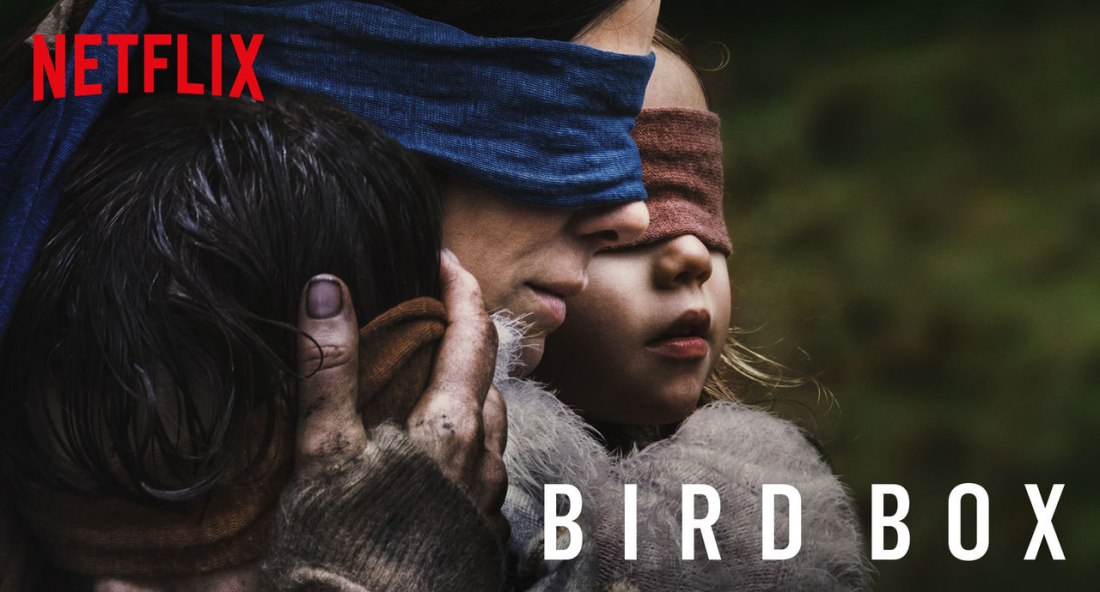
Review: Bird Box (2018)

Bird Box is Netflix’s take on the post-apocalyptic horror genre, similar to films such as A Quiet Place in its dedication more to the method of survival than to the horrors of whatever monstrosity is causing that struggle.

Bird Box follows Malorie Hayes (Sandra Bullock) both during the initial disaster where she finds herself among a ragtag band of rather generic survivors, and five years later as she guides two children down river toward hopeful salvation. Some undefined creatures have been released upon the world, causing suicidal frenzy upon those who witness their presence – survival means blinding oneself to the outside world.

The central problem with Bird Box feels like one of pure machination. The narrative is Lovecraftian in concept, which is a genre that has never quite seen a proper film adaptation. You never have to show your monster – Jaws is a classic due to the way it maneuvers around direct representation – but you have to do something to establish the menacing presence.

These creatures work to a certain degree, but it’s never very satisfying. Everything it evokes is cliched, from ominous wind to whispering voices. The problem is Bird Box barely defines their intent while also suggesting the creatures are malevolent through that whispering. If they are actively evil, what’s stopping them from doing more? Are they incapable of touch, of going inside? The premise would work better if the creatures simply existed, their danger being that mere existence – but then they would have had to come up with something more creative than whispering.

But like most modern films in this style, Bird Box wants us to focus more on the interpersonal conflict among the survivors. It is unfortunately more cliched in that regard. A rather stellar cast of actors is given little to work with; the big names play their parts well enough, but they can only do so much with ‘angry drunk man’ and ‘old woman.’ The future story also makes it clear what will happen to everyone here. There are few gripping moral dilemmas, and the characters never develop enough to care what happens. It’s as rudimentary as these plot lines get.

The one place where Bird Box works well is in the river segment. Though the interweaving of the two narratives spoils the earlier story, it also manages some excellent foreshadowing. We first encounter a madman during the river sequence, a familiar matter to this future Malorie but an unknown threat to the earlier survivors. There’s also the lingering question of which of the two children is her biological child. Questions in one sequence are answered in the other, and a few of the climactic scenes on the river really work because of it.

It says a lot that a film with Sandra Bullock, John Malkovich, Jacki Weaver and Sarah Paulson has its most powerful moment delivered by a child. This is a story that works best while playing to its subtleties, but it gets too caught up in a familiar narrative structure.

All in all, Bird Box is a decent stab at a difficult subject matter. I doubt a proper adaptation of this style of literature would be impossible – but the film holds too much to traditional narrative structure when the story requires at least some experimentation to capture certain elements. Where films like It Comes at Night and The Witch succeed by dragging out the unknown, everything here is played too blatantly. It’s a horror that wants to be a drama, but the drama is rarely solid enough and the horror too simplistic to make up for it.

2.5 Stars Out of 5

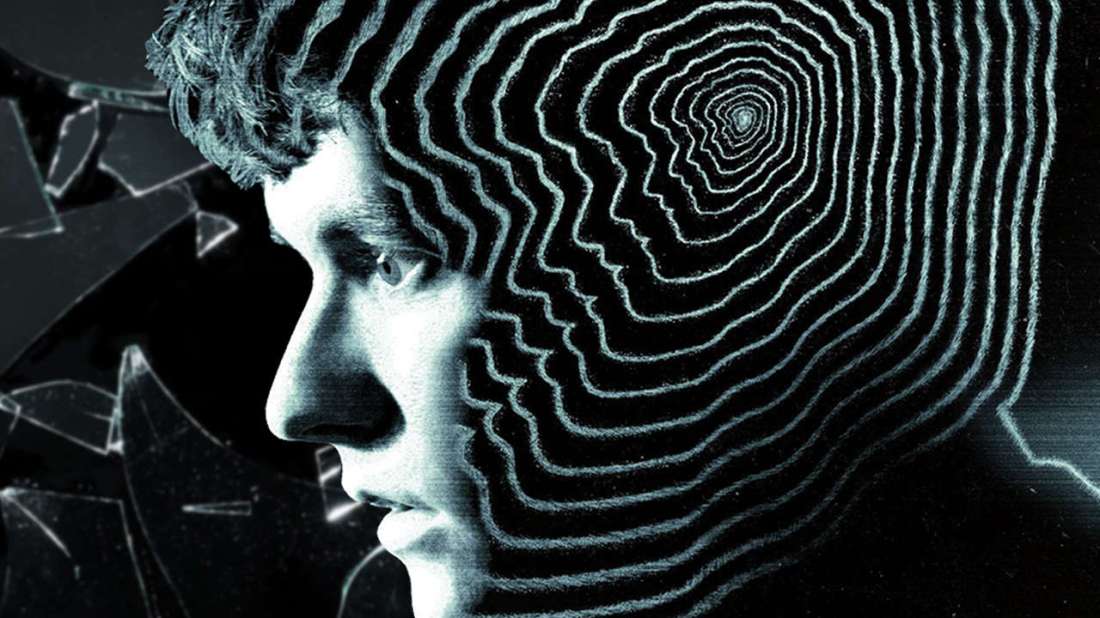
Review: Black Mirror: Bandersnatch (2018)

Black Mirror: Bandersnatch is the first film of the Black Mirror franchise, though calling it a film doesn’t exactly feel accurate – it’s a form of interactive media. It attempts to push the boundaries of what a film can be; to what purpose, I’m not exactly sure.

It’s really difficult to view this as a film; it’s being streamed through Netflix, sure, but watching Bandersnatch is essentially the same experience as playing a less interactive Telltale adventure game. I’m essentially doing the same things watching it as I am while playing Life is Strange, down to having to hold the same controller. In fact, for the second time this month, I find myself comparing a film directly to the Zero Escape series. Bandersnatch is obsessed with the question of ‘what if a character in a piece of media becomes aware they are being controlled by an outside force, and that force is the audience,’ but it’s been done. A lot. Bandersnatch makes an absolutely subpar adventure game, which means it doesn’t exactly operate as a great film, either.

The central narrative of Bandersnatch is too on-the-nose to be effective – a young man is attempting to design a ‘choose your own adventure’-style video game in the mid-1980s, basing his work on a massive novel by a man who went mad while writing it. He, surprise surprise, starts descending into madness as he works on his project, beginning to unravel at the idea of conspiracies and multiple timelines.

After going through many of its endings, I have no idea what it is actually trying to say as a whole. Where a game like Zero Escape: Virtue’s Last Reward manages to wrap 20 or more endings into a cohesive narrative where each ending matters and adds to the others, Bandersnatch feels like an effort in randomness. Most of the endings are outright stupid, many drawing from Black Mirror’s worst cynical leanings.

Bandersnatch is a film committed to a gimmick and little more. The production value is fine enough; it certainly looks like a Black Mirror episode. But it goes off the rails quickly, and nothing ends up being all that satisfying. It hints at sinister possibilities, but it offers up so many options that there’s no centralizing force.

Netflix put in a lot of effort to make a work of little real impact. Video games have been perfecting the ‘interactive movie’ for decades; why watch one that’s less than two hours long with little cohesion when there are dozens of games doing the same thing but better on practically every front? The only selling point here is that it’s live action.

I don’t believe it’s impossible to make a proper interactive Black Mirror episode; interactive movies as a concept work. But Bandersnatch seems to think it can coast off the concept alone, seemingly convinced it’s original when it’s not at all. There’s no substance, just a flowchart of failed ideas. It’s pure novelty that’s not novel, a failed entry in a franchise that was already beginning to show cracks in its most recent season. Here’s hoping season five tries harder.

1.5 Stars Out of 5

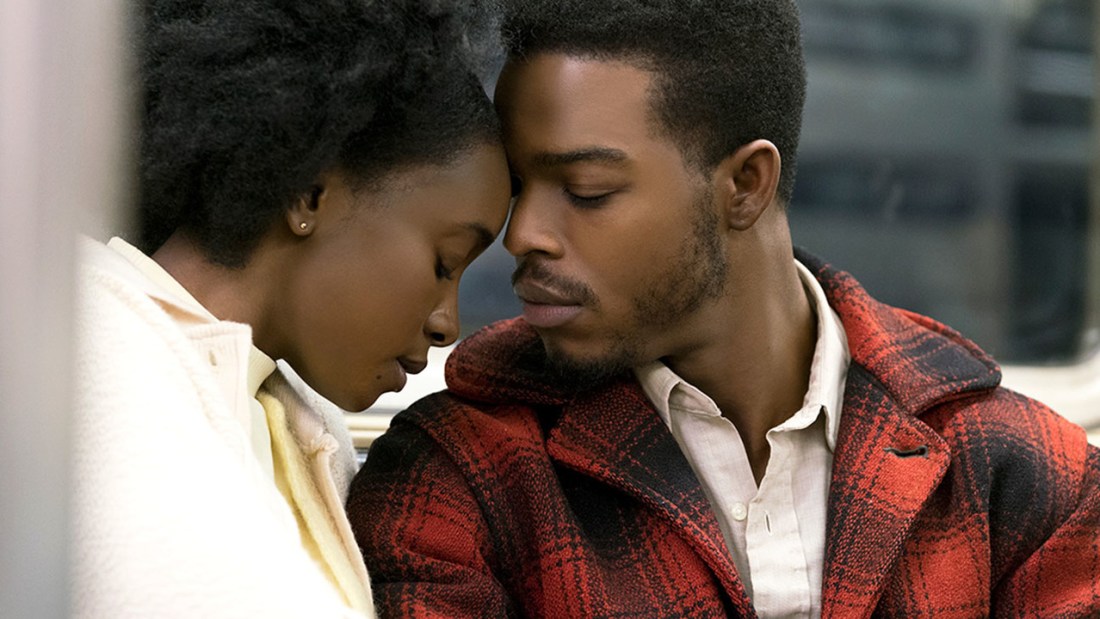
Review: If Beale Street Could Talk (2018)

If Beale Street Could Talk is Barry Jenkin’s follow-up to Moonlight, an absolutely stunning tale of a young black man discovering his sexuality during the 1980s – with Moonlight standing as my personal favorite film of this decade, Beale Street carries high expectations.

Based on a James Baldwin novel and following a young black couple in the early 1970s as the man is wrongly sent to prison, If Beale Street Could Talk carries a suitably heavy theme. Tish reveals she is pregnant with Fonny’s child as they sit separated by the glass in a visiting room; most of their love we get through flashbacks, the kind that blurs into the foreground with no clear visual delineation. Like Moonlight, Beale Street carries this sense of timelessness, that the events of the past weigh so heavily upon its subjects that the entire force of their impact pushes them through their present trauma. This is the story of a love worth going to the edge of the earth to save.

As such, Beale Street is not a work of pure tragedy; Barry Jenkins captures the beauty of little moments. The innocent nervousness of the couple’s first sexual encounter, the absolute glee as Fonny runs into an old friend, Tish holding her child for the first time; despite everything, there are moments of happiness that shine through.

The dialogue carries an expert wit; an early scene finds Tish announcing her pregnancy to Fonny’s family, and it is equally hilarious and devastating. The fathers are delighted in the prospect while Fonny’s mother claims religious devastation. The women spar with each other, their words increasingly barbed as the conversation carries on.

Other moments work solidly as passages. Tish narrates a scene as she works behind the perfume counter in a department store, observing the way in which different sets of people approach her. There’s this floating structure to the film’s presentation, taking steps back to let characters tell their own stories.

The very humanistic nature of Beale Street is matched by its phenomenal impressionistic cinematography. So much of the film consists of close-up shots, the background becoming increasingly blurred as emotions rise until the actors are the only element in focus. A particularly devastating shot finds Fonny stepping back, the entire image going out of focus as he loses sense of his own being. Beale Street captures that sense that, at our highest and lowest moments, it’s as if the world itself fades, only the self remaining.

Beale Street expertly showcases how a singular focus can impress just as much as a wide lens or an extended take. The lighting, the set design, it all coalesces around the central figure in each shot. Of course, none of this would work if the acting wasn’t high quality; so many shots leave the actors standing alone, backed by nothing but a blur of colors.

Barry Jenkins has created one of those works that feels like the Great American Film, a piece that so perfectly captures American culture in a certain time and place while seeming to carry a certain agelessness, a message as relevant in this era as it would be in any other. But it’s the unfortunate fact of these works that they carry a certain symbolic element, the feeling that they are trying to say everything at once. As human as these characters feel, as real as their situations are, there’s this constant lingering feeling that they represent something larger than themselves. Which, while I feel this is true of many fictional works, Beale Street has this way of drawing attention to its own artifice with occasional grand statements about the American experience. This is especially jarring with how each individual scene is shot with such singular focus; it’s a quiet film with loud aspirations, at its best when its characters are alone in their own time and space.

All in all, If Beale Street Could Talk is a worthy successor to Moonlight. It might lack the tight, cyclical focus that made Moonlight an outright masterpiece, but Barry Jenkins still carries a stunning eye for each individual moment. Moonlight was no fluke; Beale Street solidifies Jenkins as one of cinema’s young greats.

4.5 Stars out of 5

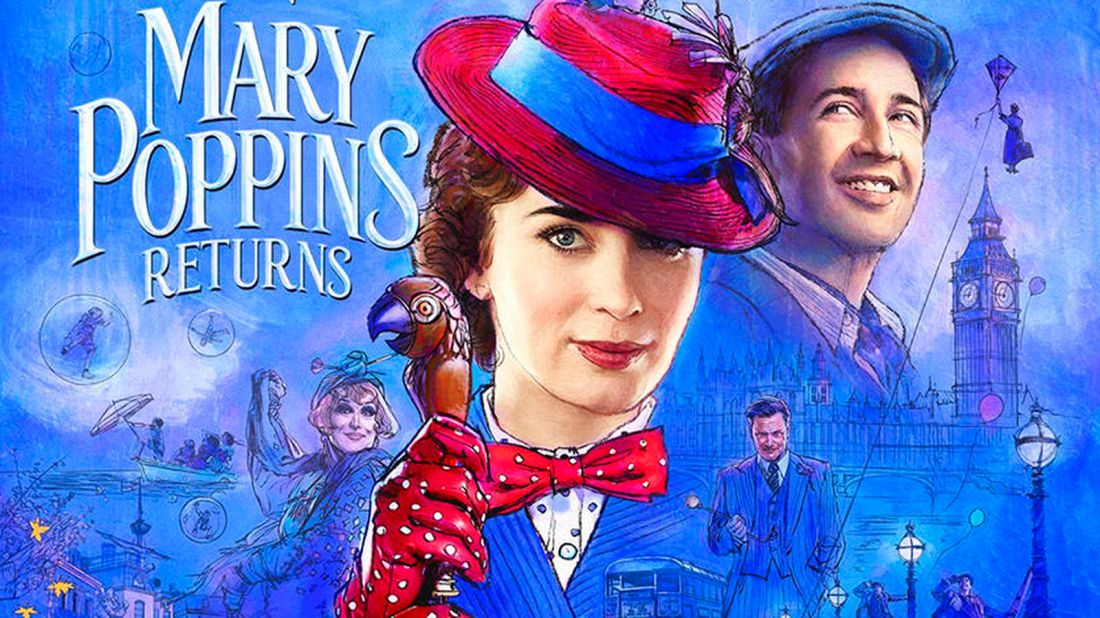
Review: Mary Poppins Returns (2018)

Mary Poppins Returns is one of several recent Disney nostalgia pieces; but instead of being an unnecessary live action remake of a classic animated film, it at least exists as a proper (if a bit too familiar) sequel.

So I guess I should be upfront about the fact that I honestly don’t care all that much about the original Mary Poppins. It’s a pleasant and charming experience, but it works like candy. Enjoyable in the moment, but little hangs around outside of a few classic musical numbers and Julie Andrews’ wonderful performance.

Mary Poppins Returns is a lot like that, but with less charm and artistry. It captures the general feeling of the original, but Disney seems all too aware that it didn’t have to do much to get an audience. Its pleasantness is purely mechanical; more than anything, this is the product of a mega-corporation that can’t be bothered to take risks. They know how to make a film work; but art should do more than just ‘work.’

How does Emily Blunt compare to Julie Andrews? That’s an unfair question to ask of most actresses; Blunt is going up against one of the all-time great performances. And, unfortunately, the film really doesn’t give her any moments to really shine. She does well enough, but there’s nothing particularly magical.

Which I feel is the perfect summary of the film itself; nothing particularly magical. The musical numbers are just fine; there’s no “Spoonful of Sugar” or “Supercalifragilisticexpialidocious” to get stuck in your head for the rest of time, nor any dance numbers as mesmerizing as “Step in Time.” In fact, just a day later, I can’t remember the sound of any of the musical numbers in this sequel. The scenes are pretty in their moment, but that’s all they really have to offer; momentary pleasure.

Mary Poppins Returns is a film with a key and necessary sense of visual design; but a lot of it is lost through rudimentary cinematic technique. The cinematography and editing are as simplistic as they come. So many of the scenes are simple waist-up shots of whoever is currently speaking, the film cutting back and forth between frantic conversations. There never seems to be any effort in framing the scenes; it’s a simple string of shot-reverse shot for many sequences, and a lot of slight adjustments that could have been avoided. Instead of guiding us, the camera and editing seems to be in a perpetual state of trying to keep up. These issues tend to (but don’t entirely) fade away during the musical numbers, which suggests that even the filmmakers don’t particularly care for the bits between.

There are moments where I’m not sure what Mary Poppins Returns is trying to say. The narrative relies too much on conveniences, and when nothing else comes along to solve the problem, it has a magical nanny who can step in and fix everything. An entire sequence at the end is almost completely negated by Mary’s intervention.

As pleasant and charming as it can be, Mary Poppins Returns never escapes from feeling like a product designed to be as safe and accessible as possible. Admittedly, in a world where family films can tend toward the grating and stale, it can be nice to have a work that is at least all around pleasant, and Mary Poppins Returns delivers there. But this film allows itself to be overshadowed by the original in pretty much every way. And in the same year as Paddington 2 and Spider-Man: Into the Spider-Verse, we know family films can do so much more than be pleasant.

3 Stars Out of 5

Review: Escape Room (2019)

Escape Room is an early January, PG-13 horror movie about a group of strangers trapped in a series of killer escape rooms; as such, you can’t go in with too many expectations, but it does a fair job of reaching those minimal hopes of at least being fun.

First things first, if you truly are itching for a good story about deadly escape rooms, go play the Zero Escape video game trilogy; though this may seem like a dumb premise, this is one that has actually been done incredibly well in a different medium – and considering the protagonist of this film starts off in a quantum physics class, I feel the writers have to be aware of this series. There’s no way to watch this movie and not compare the two.

As Zero Escape proves, the concept of Escape Room has room for excellence, but it requires a certain bit of cleverness the creators never strive to achieve. Actual escape rooms are full of twisted logic, and many times devolve into a room full of people yelling at each other in a panic as they become overwhelmed by puzzles. The most obvious way to translate this into horror is to make the solutions themselves dangerous; trying the wrong thing means risking death.

But here, the deaths are largely incidental. Of course the rooms themselves need to be dangerous to set the threat, but their true purpose should be to push the protagonists into doing something even more dangerous to escape. But there’s rarely a moment where anyone chooses to take a risk to proceed. There’s no satisfying ironies or conundrums here, just the basic struggle for survival.

The characters and dialogue are likewise shallow. Zoey is blandly quiet, Ben is a classical failure, Danny’s too oblivious to function, and on and on. A central premise is that these characters have all survived disasters in the past, but that seems to largely serve the purpose of trying to force our sympathies.

Escape Room also has a simply atrocious beginning and end. It opens with a character alone in a room, desperately trying to escape. It’s something we have come to expect from films like this, an earlier victim being shown meeting their gruesome fate – but this is no earlier victim. This is one of the main protagonists. They literally start the movie by showing that this particular character is going to be alone in one of the rooms, essentially spoiling the fates of everyone else. Additionally, the film introduces three of the characters before the game begins; it’s not hard to figure out why they get introductions and the others do not.

The last ten minutes exist purely to set up a sequel. There’s no satisfying conclusion here, just the bold promise for more. Due to this, Escape Room feels like part one of two.

While the story is flawed in numerous ways, I don’t find Escape Room entirely worthless. It’s tense where it needs to be, and the visual design of the rooms largely works. The upside-down room is an especially satisfying sequence. The technical and stylistic aspects are competent enough.

Escape Room works if you’re looking for some mindless entertainment; I never found myself bored outside of the overlong sequel setup. But it never aspires to anything more, and poor writing drags everything else down. It feels as if the creators thought the premise was clever enough on its own, without realizing the setups of the individual rooms would be the driving force of that cleverness; there’s no sense of effort. Instead, it’s Saw-lite, and who wants to be that?

1.5 Stars Out of 5

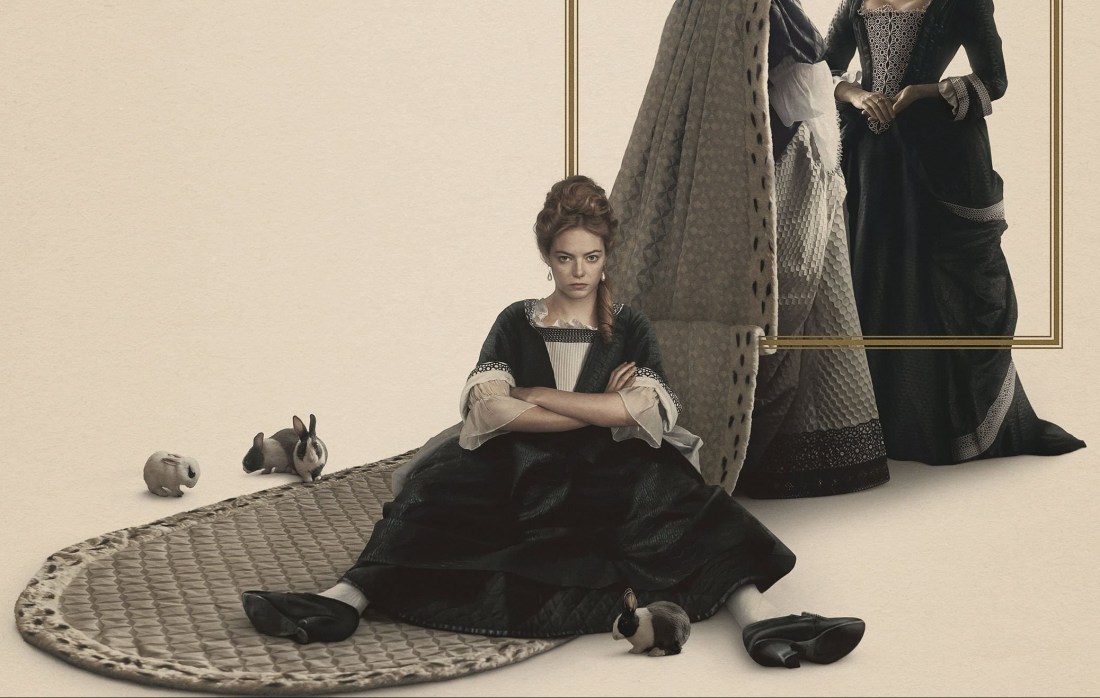
Review: The Favourite (2018)

The Favourite is a film I had to approach with a certain caution; Yorgos Lanthimos’s previous two films were promising concepts marred by bizarre narrative choices. There was so much distance from the characters in The Lobster and The Killing of a Sacred Deer that any potentially meaningful moment lost most of its impact. It is clear Lanthimos is attempting a certain surreal style, but he hasn’t quite gotten it to fully work. The positives largely outweigh the negatives in both, but both failed to stick a landing. They have the touch of a master-in-training, someone with clear talent still figuring out how to make an overall cohesive and compelling piece.

The Favourite gets off to a strong start by never promising anything too big. This is a straightforward piece, a tale of two women fighting for the affection of Queen Anne, their battle growing increasingly desperate as the film goes on. Lanthimos avoids having to waste time elaborating on an oddball hook that works better in concept than in action, instead able to focus on his best traits as a director.

The Favourite offers up a simply phenomenal screenplay to three equally wonderful actresses. Olivia Colman, Emma Stone and Rachel Weisz play perfect foils to each other. Colman’s Queen Anne is an eccentric, lost to her whims whenever they arrive, gullible yet convinced of her control. She is a figure that is there to be manipulated, always teetering on the edge of lashing out due to distrust.

Stone’s Abigail and Weisz’s Sarah are in a necessary war with each other. Abigail aspires to move up in life, a fallen lady, and the easiest option is to win the queen’s favour. Sarah, meanwhile, has been a lifelong companion to the queen, now manipulating her to carry on an unpopular war. These two characters play aware of the other’s manipulations, both knowing they must cover for the other lest they similarly be discovered.

The screenplay offers many muted yet blunt barbs between the two. Weisz is in control of her reactions, a woman convinced of her own ability to win out in the end. Stone, meanwhile, plays Abigail as a woman lacking in subtlety. She scoffs and turns away to mutter under her breath, only barely capable of hiding her intentions. Queen Anne, meanwhile, is the one character allowed to speak her true mind at any moment, granting her a certain oblivious straightforwardness that is both hilarious and frightening.

Lanthimos has an affinity for vulgarity. In his earlier works, it served little more than to remind us that the characters existed in a social world that operated differently than our own. We expect a certain response, but characters ignore these statements as if they are entirely normal. Here, the vulgarity instead works as a statement; the past is nowhere near as clean as other period pieces like to pretend. It plays against our expectations, but the actresses speak with such conviction that it never strikes as out of place. The greatest moments of this film come when a character says something entirely awful, in part because it reveals the power they believe they carry.

The Favourite, while great because it resists the glorification of the past so inherent in most period pieces, delights in visual pleasure. The costumes, the set design, they are all very gorgeous. Lanthimos uses this to play with us; we believe the designs as concepts of the past, allowing him to sneak in modern elements that create confusion before you catch up to the fact that, yes, this film made in 2018 is capable of mixing several eras together without justification. One of the film’s finest scenes finds Weisz dancing with a man at a party, their moves increasingly out of place as it carries on. Lanthimos finds comedy by adding pieces that don’t fit.

The Favourite is a success through and through. Lanthimos avoids getting lost in concepts, creating his first film where the characters feel like actual people. As such, there’s a degree of emotional investment, even as the three leads become increasingly awful people. His playfulness is likewise more effective, as his toying is more obviously humorous. Like The Handmaiden from two years earlier, The Favourite stands as one of the best modern period pieces in large part by questioning and deconstructing the genre in a way that puts the past in an odd but more believable light. Behind all the fancy costumes and parties, this is an era where people had to violently struggle to survive in a world of rigid social structure, where everything can be lost on the whims of a single unsound person.

5 out of 5 Stars

Review: Bumblebee (2018)

I ended up checking out Bumblebee as a curiosity; a late stage sequel in a franchise that never quite did anything worthwhile, suddenly heaped with not exactly glowing praise but at least an overall sense of positivity.

The Transformers film franchise has always been steeped in nostalgia, and Bumblebee seems to finally make it work by pushing it to an extreme. This isn’t nostalgia purely for the cartoon, but the 80s as a whole. The film mixes in the music, the fashion, and everything else from the era. Little touches like the leads bonding over The Smiths really place it in a specific era, and the references flow naturally through the story.

My problem with the initial Transformers was how much time it wasted on human characters, and I used to suggest a perfect move in this franchise would be to reduce the narrative as much as possible and simply find excuses for robots to demolish each other for an hour and a half. Plot never seemed a necessity, and as a few key action films since its release have proven, you can make a film run almost entirely off action sequences if done properly.

Yet Bumblebee runs pretty hard in the opposite direction and makes it work. Specifically, it gives us a really solid protagonist in Charlie, the Smiths-loving proto-gothic teenager who rebuilds Bumblebee at a junkyard. This is a coming-of-age tale that happens to feature a few giant robots. She feels surprisingly real for this franchise.

Which, one of the flaws of this film is how shallow everyone else seems to be. Charlie is a human among cartoons. The school bullies are over-the-top, John Cena plays an obnoxious military agent; the challenges she faces are reduced by how absurd the people she faces are.

Bumblebee is a film with heart in a franchise that previously served as little more than a product, and it works by limiting the scope. Instead of getting carried away with metal-on-metal CGI fests, Bumblebee finds more creative ways to pit the lead robot against the environment he finds himself in. And when we do get those necessary robot fights, they seem to come with better framing than I remember from the past. Which, really comes down to one obvious element: Travis Knight is a much better director than Michael Bay, even in his first live action work. From his work in stop motion animation, it is clear he has learned a lot about how to properly frame action.

Even as the best film in its franchise, Bumblebee still has the annoying tendency to fall back into the juvenile humor found in the earlier films. This is luckily to a lesser degree, but there are quite a few scenes that I feel could have been reduced or cut entirely, especially since the film runs a bit longer than it needed.

Ultimately, Bumblebee is a perfectly pleasant film. It doesn’t push itself to any meaningful degree, but it boils away most of what harmed the other movies in its franchise. I can say I walked away having enjoyed myself, which I feel is all it really set out to do. In that regard, it’s a definite success.

3.5 out of 5 stars