Paper Mario: The Thousand-Year Door (2004) Developed by Intelligent Systems
I realized after starting this project that writing about the Paper Mario games would be among the hardest. Having not played either game in over a decade now, certain elements have blurred together. Add in that The Thousand-Year Door is a sequel in the most traditional sense, and how do I say enough about both without repeating myself?
There are other series with multiple entries, but most have distinct enough features that I can really hone in on those specific quirks. The Thousand-Year Door is Paper Mario but bigger and better, but not in a way which makes the predecessor obsolete. Unlike comparing Left 4 Dead to its sequel, Paper Mario and The Thousand-Year Door remain distinct experiences due to features typical of the JRPG franchise. They have their own sets of characters and stories, with both having great writing. The real sticking point for both deserving their place on this list is that Paper Mario’s charm is in its simplicity; TTYD making things even slightly more complex means certain people will prefer the original.
The two chapters from The Thousand-Year Door which have stuck with me the most come from opposite ends of the spectrum. Both highlight distinct traits that make the Paper Mario series so good. The first is chapter 3, which features Mario fighting his way through a series of arena battles. Where most Paper Mario chapters are full of areas to explore, the Glitz Pit remains focused on combat. There are a ton of battles to fight through, and each comes with their own stipulation which limits your options. This can really force the player to change up their strategy. Champion Rawk Hawk is one of the more memorable characters in the series, his narcissistic attitude perfect encouragement to climb the ranks and beat him down.
Chapter 6, on the other hand, is all about Paper Mario’s humorous sense of storytelling. Mario finds himself on a train with a bunch of odd passengers and eventually gets caught up in a series of mysteries. This pseudo-Christie narrative gives the writers a perfect opportunity to go crazy. An encounter involving a ghost’s diary plays an especially fun trick on the curious.
Changes to the battle system help make the partners feel more distinct. TTYD gives partners their own HP value, making them feel more like traditional party members. The game also introduces an audience who have various interactions throughout the game. These changes aren’t huge, but that’s key to the signature simplicity.
Like its predecessor, TTYD cuts away to Princess Peach. Getting to actually know the princess rarely happens in the main series, and she is a lot of fun here. We also get a few moments to play as Bowser in classic Mario inspired levels.
There’s not much more to say about The Thousand-Year Door in comparison to the original. The first Paper Mario is a short and simple JRPG, a genre which usually goes for complexity and epic quests. The Thousand-Year Door is more of this, but where everything feels slightly improved. The Mario series has tons of spin-offs, but few feel as key to its grander identity due to the charming handling of its universe.
Dragon Quest VIII: Journey of the Cursed King (2005) Developed by Level-5
Dragon Quest was the first JRPG to find real success, and the series has purposefully kept to simple mechanics ever since. Due to this lack of evolution, most of the Dragon Quest games are acceptable favorites. VIII simply hits a specific niche which resonates with me. Where earlier entries are as aesthetically simple as the mechanics, VIII pairs the classic gameplay with an ever-expansive world.
When I first played this back in 2005, I had never encountered a game which felt so big. Most JRPGs tended toward overworlds which essentially truncate the locations for easier navigation. Dragon Quest VIII keeps everything to scale. Combined with the gorgeous cel-shading, this is easily one of the most aesthetically pleasing games of its era. There were so many moments where I would stop playing to stare in awe at the land. More games have moved to this presentation style, but few match the sense of wonder found here.
Matching the visual scale is the game’s massive length. The overarching narrative is incredibly simple, but most of the game consists of self-contained missions with a ton of charm. Each new location has its own story. Games of such size usually have a ton of empty space, but every inch of Dragon Quest VIII has purpose.
The gameplay is simple, but that does not mean it’s shallow. Each character comes with their own sets of skills which the player can control, giving variance to different playthroughs. Boss battles tend to be strategic affairs. The only real problem is the series’ overreliance on metal slimes; there are a few points where it feels like you have to grind to keep up, and that largely devolves into hunting the same rare monsters over and over.
The series in general is charming, but that’s really brought to life here. The creatures have tons of distinct designs and their own silly mechanics. Some early monsters will simply devolve into laughter for their turn, while another will waste its turn casting a late-game spell for which it lacks the MP. The world captures everything from rural country sides to sprawling kingdoms to frozen grottos. The central cast all have their own quirks. The highlight is Yangus, a bumbling bandit with a thick Cockney accent.
The minor quests each offer their own distinct atmosphere. Some can be somber, such as a kingdom in mourning. The one which sticks out most happens in the kingdom of Argonia, where the party must assist the spoiled Prince Charmles (Get it? Charmless? This series loves its puns) in hunting giant lizards. Charmles joins the party, but completely fumbles everything he does and ends up running away. These diverse quests help sustain this massive journey.
Dragon Quest VIII is an exceptional JRPG not because it pushes the genre forward, but because it offers the basics in stellar form. It might seem wrong to praise a game purely for offering a stylistic improvement over its predecessors, but there’s no need to fix what’s not broken. VIII takes the familiar and makes it bigger than life.
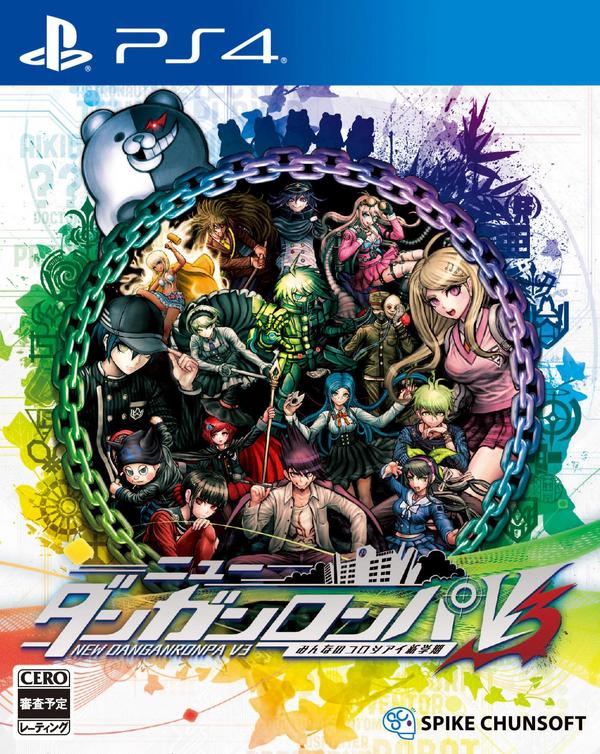
Danganronpa V3: KIlling Harmony (2017) Developed by Spike Chunsoft
Though classified under the wider visual novel umbrella, Danganronpa is far from an experience where you press a button to forward the plot. Danganronpa owes much of its existence to the Ace Attorney series, where plucky lawyer Phoenix Wright defends the innocent from a nightmarish justice system. Where Ace Attorney tends to balance playfulness and gravity, Danganronpa acts as the cynical and edgy younger sibling.
The situation in each game is immediately dire. A high school class finds themselves kidnapped by an evil bear named Monokuma. Taking inspiration from Battle Royale, the class is forced to kill one another. Where it differs is that Danganronpa avoids a simple killing spree by shifting the focus to getting away with murder. To escape, a student must kill and then avoid being caught by their classmates during a ‘class trial.’ Those who fail are executed in an excruciating and thematically relevant fashion.
What makes these games such compelling mysteries is the limited cast. By taking elements from the dating sim subgenre, you are given several opportunities to spend one-on-one time with characters between cases. Thus, these aren’t just random characters being brought in only as they become relevant. By spending the entire game with this same cast, every new death carries weight. With each new case knocking out both the victim and killer, the cast is ultimately reduced to only a handful. With such a colorful cast of characters, this can be devastating.
Danganronpa makes effective use of archetypes. None of these are ordinary teenagers. All of them have exceptional skills and have been granted the ‘ultimate’ label. The protagonist here, Kaede Akamatsu, is the Ultimate Pianist. Others include the Ultimate Entomologist and the Ultimate Cosplayer. Archetypes allow the player to immediately get a sense of this gigantic cast. More importantly, stark archetypes leave room for striking subversions during the cases.
Danganronpa V3 builds upon the gameplay of the earlier games. Where the original is all about pointing out lies and the second introduced the ability to support claims, V3 introduces the option to tell your own lies. What differentiates this from Ace Attorney is that these are not true legal cases; the killer is already known due to Monokuma’s constant surveillance, so he is only looking for the class to correctly identify that person. In V3, the player must use whatever means necessary.
Additionally, these games are just stylish. Instead of the straightforward presentation of Ace Attorney, dialogue during the class trials is a chaotic mess. People speak over one another, and the difficulty of drawing attention to a specific statement involves literally shooting through the background noise. Even with unmoving sprites, the game manages a feeling of constant motion during the trials.
To discuss what makes this entry so grand involves going into specifics. Due to the nature of its plot, discussing anything beyond the introduction can spoil the experience. Being a mystery game, I heavily suggest stopping here if you have any interest – I will be spoiling everything.
Again, these following paragraphs will spoil everything, including a few references to earlier games in the franchise; mysteries like these need to be experienced blind (In fact, don’t even look these games up – I had the first game spoiled due to a simple search).
The Danganronpa franchise is built around the idea of a limited cast where literally anyone can die. While there may be shades of plot armor in the first game with two of the survivors being rather obvious, the second made sure to subvert those expectations. V3 does this immediately.
Earlier, I had to falsely claim the protagonist was Ultimate Pianist Kaede Akamatsu. Halfway through the first case, you are presented with the familiar option of choosing the killer. As you consider the options, the truth begins to dawn; she has been the killer all along. Once she accuses herself, the game shifts perspective to Ultimate Detective Shuichi Saihara. With the first victim having an unknown Ultimate ability, V3 dared to eliminate two of the most intriguing characters right off the bat. Anything goes.
In fact, V3 goes to great lengths to pull the rug out from under the player again and again. This is not limited to the mysteries. Where the previous execution scenes were largely playful besides the very first (a remnant predating the decision to make the series darkly humorous instead of bleak – something like this would be nauseating with the wrong tone), Kaede’s death is horrific. Besides the moments where you stumble across the body, the earlier Danganronpa games rarely try to disturb the player. There are moments in V3 which are uncharacteristically exploitative.
At the same time, there’s something about V3 which feels too familiar. The middle cases seem to hit the same plot beats as the earlier entries. Even the subversive fifth case, the first in the series where Monokuma is as clueless as the rest of the cast and even the victim is unknown, revolves around characters in the same general roles as those involved in Danganronpa 2’s fifth case.
This all leads into one of gaming’s most controversial endings (at least for those who have experienced it). As usual, the finale revolves around identifying the mastermind behind Monokuma. The revelation that Kaede actually wasn’t the first killer is somehow immediately overshadowed by a bigger revelation; the mastermind actually says the title. ‘Danganronpa’ is nonsense, translated as ‘Bullet Refutation.’ It describes the series but never has reason to be spoken within the narrative. Never has a title drop been more jarring.
When the game was announced, ‘V3’ seemed a necessity to differentiate it from an anime sequel to the first two games titled ‘Danganronpa 3.’ That, too, turns out to be part of the meta-experience – the ‘V’ is actually a roman numeral; this is the 53rd Danganronpa in the nightmare universe where this game is set. Instead of being a direct follow-up to the earlier works, Danganronpa V3 imagines a world where the Danganronpa video games became a bigger hit than The Beatles and evolved into an exploitive reality show. All of the characters are sacrificial actors with implanted memories.
This serves one grand purpose which is easy to misunderstand. Playing Danganronpa offers a macabre pleasure, and this fourth-wall breaking finale allows the characters to directly confront the player through their interactions with the show’s audience. What sick monsters are we to enjoy repeatedly watching this same scenario play out over and over? Many reacted to this ending as if the game was pointing an accusatory finger; but we are not the same as this audience who devolved into demanding actual killing. The game never offers a firm explanation, but that’s because we as the players should be able to answer ourselves.
So I should close this out by answering that question; if I’m not some sick monster, why do I enjoy something as macabre as Danganronpa? It’s the same reason I play any other video game, to face off against adversity in a controlled environment. Danganronpa specifically captures the feeling of loss in a safe manner. Due to its structure, the connections to these bizarre characters feel stronger than almost every other franchise. To play a video game involves being more than a passive audience. I don’t play Danganronpa because I want to watch these characters die. I play Danganronpa because I want to help guide those remaining to safety.
Uncharted 2: Among Thieves (2009) Developed by Naughty Dog
Attempts to capture the magic of cinema in video game form have been around since almost the beginning. Many end up leaning closer to one of these mediums than the other. Early attempts such as Dragon’s Lair simply showed scenes while requiring sudden button presses to keep the scene going. A lot of other ‘cinematic’ games grind to constant halts, forcing the player to drop their controller while a cutscene plays out. When all the awe and spectacle is limited to these moments, it can make the actual action disappointing. While Uncharted has never been free of cutscenes, the best moments are all part of the gameplay.
Lacking a better term, Uncharted 2 is one of the top examples of the setpiece action-adventure genre. Few games have such stunning openings. Nathan Drake wakes bloodied in a train, which he quickly realizes is dangling precariously over a snowy cliff. After falling to the railing at the bottom, the game immediately switches to the player’s control. You must guide Nathan Drake up the train as everything falls apart. Few moments in ‘cinematic’ gaming feel so visceral; if this is where we begin, what other tricks does Uncharted 2 have up its sleeves? This is a game about constant escalation which dares to puts its best foot forward.
The inspiration is obvious – Uncharted is essentially the Indiana Jones franchise in video game form. But plenty of games feature harried archaeologists running into thieves and waking ancient evils. What other attempts lacked was the ability to capture the extravagant situations Indy would find himself in.
Key to Uncharted 2 is the smoothness of its gameplay – the first game set the stage, but combat was a clunky mess. The sequel throws a lot at you as it switches up the sets, but it’s never hard to transition. While several sets simply require climbing, the best moments mix navigation with a constant threat. One early highlight finds Nathan fleeing through a collapsing hotel while assaulted by a helicopter. Even when he finds brief cover from the copter, more enemies pop around the corner for shootouts.
The sequence leading to the opening train wreck (the first part of the game being the typical “how did I get into this mess” presentation) is just as exciting, requiring Drake to jump between train cars and fend off gunmen as he’s carried from the jungle up to the Himalayas. Another highlight involves a tank. Uncharted 2 succeeds at making everything look impossible before offering a path to victory.
Even outside the big action sequences, Uncharted 2 has a compelling narrative. The characters are strong, with Nathan Drake being one of the better-defined video game protagonists. He’s always ready with a quip when things go wrong, but his close bonds reveal his heroic nature. The sense of escalation is matched by the unfolding plot, going places you could never imagine.
It is sometimes easy to mock a game for being too cinematic; after a certain point, it can feel like the developers only told their story in video game form because they couldn’t get anyone to fund their movie. By so effortlessly integrating its narrative into the gameplay, Uncharted 2 set a new standard.
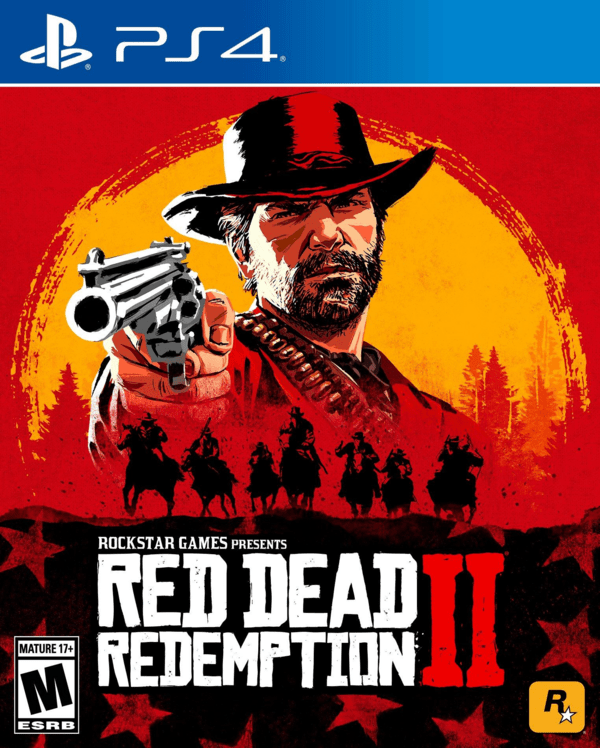
Red Dead Redemption 2 (2018) Developed by Rockstar Studios
Where the Grand Theft Auto series has almost always descended into absurdity, Red Dead Redemption serves as its mature younger brother. RDR2 pushes certain elements of realism so hard that it almost reads like parody of the modern AAA open world game. Some of the choices seem detrimental to the experience. Not including real fast travel in such a massive world is absolutely bizarre. Despite open world games tending to lean toward endless possibilities, there’s a specific way Rockstar wants you to engage with this game.
By pushing all these various elements, what Red Read Redemption 2 lacks in instant gratification is replaced by a sheer sense of scale. The constant retreading of the same roads helps form a familiar land, and there’s always something just off the main path to check out. Additionally, I simply find riding horses over the land a fun experience. Where most open world games offer a land for the player to conquer, Red Dead Redemption 2 instead seeks to overwhelm. This world is not an endless playground but something which must be survived.
As far as gameplay goes, the dead eye mechanic is Red Dead Redemption’s central selling point. Arthur can freeze down time and focus on a cluster of enemy’s, then unfreeze time and shoot them all at once. In addition to making massive gunfights more manageable, this is also a neat way of capturing the feel of old western movies. RDR2 also subscribes to Rockstar’s philosophy of including a little bit of everything; there’s loads of minigames to play and devices with their own unique mechanics.
Acting as a prequel to the original game, the player takes on the role of Arthur Morgan. He belongs to a gang coping with the end of the Wild West. There’s no place in this world for these people anymore, so much of the game finds them constantly relocating. This aimlessness really mixes well with the world, with each act change truly feeling like a distinct moment. The slow rides across the land give ample time for long conversations. This band of outlaws really feel like an old team in the midst of falling apart. This is one of the great traditional narratives in gaming, and there are some shocking twists taking full advantage of the game’s ‘realism’ bend.
These outlaws get up to a bunch of crazy schemes, and being able to play a part is a joy. This massive world is covered in perfect locations for its hundreds of shootouts. By always trying to include a little bit of everything, Rockstar ensures every mission has its own unique gimmick. From the classic bank robbery to train heists and hot air balloon trips, RDR2 keeps the player on their feet.
There are also loads of memorable side missions which have a tendency to go further off the rails than the main plot. During one memorable encounter, you meet a Nikola Tesla expy who recklessly experiments with new technology. There’s also dozens of oddities scattered across the land, from a house which has been struck by a meteor to various horror creatures. Hunting is highlighted by the inclusion of a bunch of legendary animals which offer great rewards; the variety of animals in this game is impressive. There’s always something to find.
Red Dead Redemption 2 is about as ambitious as video games come. The fact they intentionally avoided common quality of life mechanics while including almost everything else is a striking decision. Some people won’t enjoy that tedium, but it results in one of gaming’s true epics.
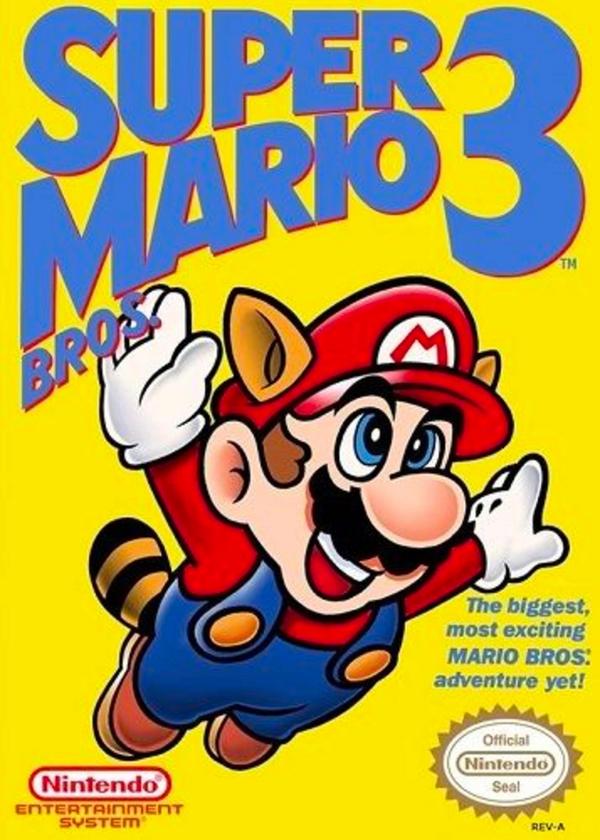
Super Mario Bros. 3 (1988) Developed by Nintendo EAD
As someone born in the early 90s who didn’t really start consuming games in large quantities until the Gamecube era, playing anything from the early Nintendo consoles required intentionally going out of my way. I’ve played pretty much all the classics at this point; Super Mario Bros., The Legend of Zelda, Metroid, Kid Icarus, Dragon Quest, Castlevania, DuckTales, Ninja Gaiden, and so on. These games are largely pleasant enough, but most laid the foundation for even better sequels. Few are singular enough to be more than a historical experience; Mega Man 2, Tetris, and Punch-Out!! stand out, even to someone with no particular nostalgia for the era. Even modernized versions of those latter two are closer to variants than direct improvements. It only seems fitting that the cream of the crop was a sequel to the game that kicked off the era.
Likely due to the popularity of Super Mario Bros. and the simplicity of the genre, the NES era was dominated by the platformer. Thanks to a certain popular design philosophy, many of these were brutally hard, and the limits of the console produced some frustrating level designs. Few things will make me drop a game faster than enemies which immediately respawn combined with outrageous knockback. But Nintendo themselves have always been in the business of family friendly content, and the early Mario games always ramped up their difficulty smoothly.
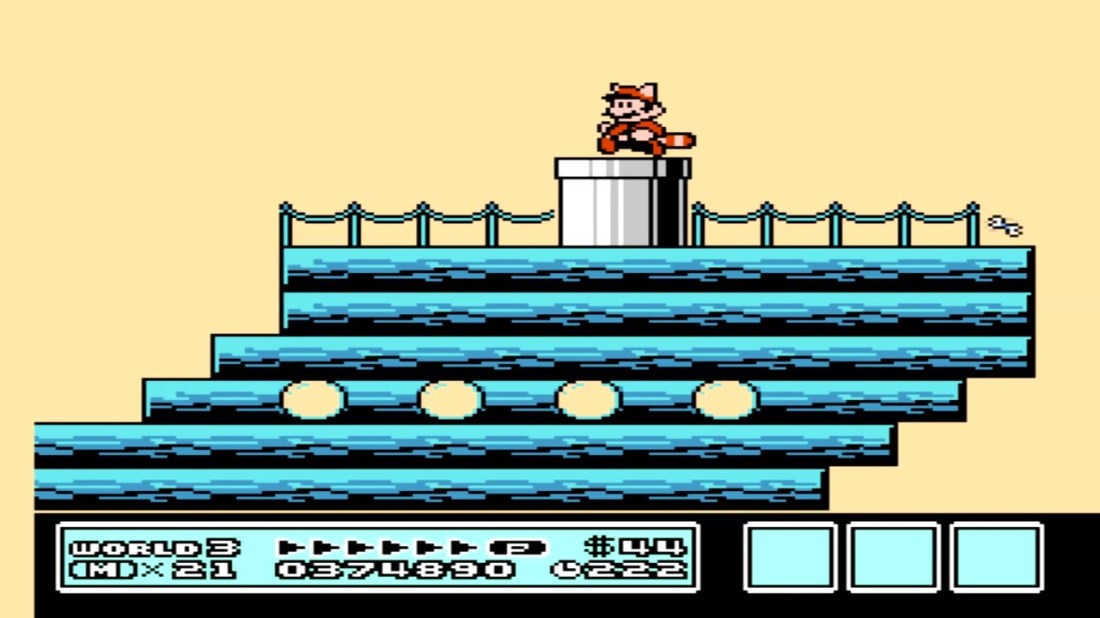
The 2D Mario games are built around a certain simplicity. In general, you run from one side of the screen to the other, with most enemies able to be defeated by simply jumping on their heads. Even the original is still a great game due to the fluid controls, but Super Mario Bros. 3 built upon that with stellar level design. Where the original only offered a fireball upgrade, 3 introduced a slew of fun items. The highlight is the tanooki suit, giving Mario the ability to fall slowly, fly, tail whip enemies, and even transform into a statue for a ground pound attack and invulnerability. The later games would especially build themselves around various power-ups, but it all started here.
With improved graphical capabilities, this is where Mario truly comes into its own stylistically. The world is filled with more color, while the koopa kids offer a nice change of pace from simply jumping over Bowser like in the original. Where the original was limited to a few basic level designs, 3 offered more styles while also introducing auto-scrolling stages. These force a sense of urgency in an otherwise gentle experience. The addition of a world map connecting these levels added to the idea of progression.
Like many great games, the selling point of Super Mario Bros. 3 is the way it mixes simple controls with intricate level designs. Anyone can pick this up and play, but it takes skill to survive the later stages. The 2D platformer has always been around, and while there are constant innovations, nothing has outright replaced the simple charm of this early masterpiece.
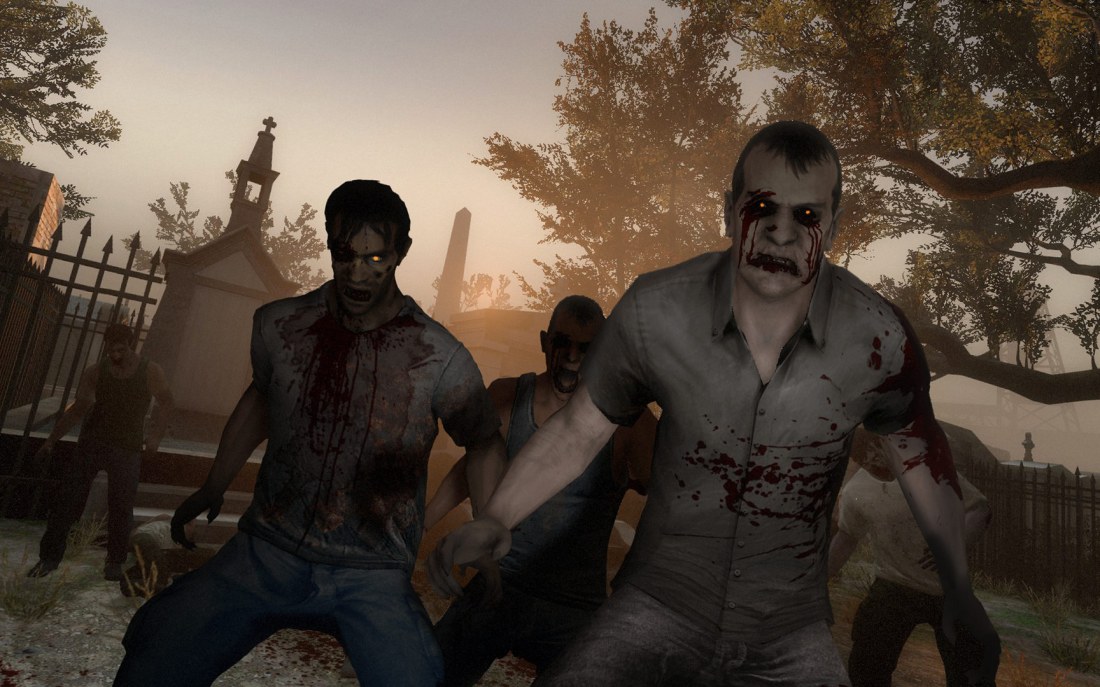
With all our time waiting for any follow-up from Valve for most of their series, it’s hard to believe there was a moment where we collectively complained about them making a sequel too soon. Released exactly one year after the first game, Left 4 Dead 2 seemed unnecessary. A few new special zombies and weapons were nice, but did that really justify a full-priced sequel? Years later, L4D2 has now absorbed nearly every piece of content from the original. Between the first game being virtually reduced to a trap for the uninformed (why are these two games the same price on Steam?) and the sequel going from questionable to the definitive experience, there are few series with a more bizarre history.
Of course, people were willing to jump into the sequel anyway because the first game was that good; all these minor improvements only made things better. For whatever reason, video games built around cooperative gameplay are few and far between. There are plenty of team-based shooters if you want to play with friends, but the experience of fighting against AI feels a bit more focused. Where losing in something like Team Fortress 2 can be blamed on a skill gap between teams, failure in Left 4 Dead is almost always due to poor strategy and communication.
Left 4 Dead is built around an old horror trope. Well, there’s zombies, obviously. But what I really mean is this obnoxious tendency for otherwise well-equipped characters to suddenly split up. There’s always some player who gets distracted while their teammates are charging ahead who then fails to say anything until a hunter has them pinned. In many ways, Left 4 Dead operates as a babysitting simulator. You must keep your eyes on your teammates at all times and hopefully convince them to do the same. While the logic could be to wait up for the straggler, the game is also designed to punish lollygagging. Large swaths of this game are best handled pushing forward as a cluster. Special infected simply don’t have the numbers to stop all four players simultaneously. But getting people to understand the need for constant progression is the real challenge.
The game also wants to prevent that optimum strategy whenever possible, which is where the special infected come in. Despite having the least direct damage output, the boomer and spitter might be the most dangerous due to their ability to divide the party. Without quick reactions, the smoker, jockey, and charger will drag someone away. The tank simply knocks everyone about, and his ability to hit multiple targets forces the team to distance. But these are never insurmountable hurdles; enough attention to one another can mitigate their presence entirely. What can a hunter really do if everyone is in melee range of each other? This is a rare game where friendly fire is essential to the design, to put at least some risk in the dominant strategy.
The inclusion of various modes helps Left 4 Dead hold up as one of those infinitely replayable games. The basic campaigns are the central experience, with several levels of difficulty and each consisting of multiple levels to navigate. Valve clearly had a lot of fun designing these individual levels. From stealing a race car from a mall exhibit to a journey through a tunnel of love to a swampy shantytown, there’s always some set which stands out. Additionally, several sections are perfectly designed to amplify risks. There are places where you must jump down with no way to return; someone lagging behind becomes easy pickings for the infected.
Just as essential is versus mode, where two teams switch between playing the survivors and special infected. Simply being able to learn how the special infected operate is a nice feature. It still offers largely the same experience as the campaign mode (as the goal is to get as far as you can on each level of a campaign; whichever team gets further wins) but hopefully with more logical infected. Strangely enough, playing as the infected can feel even more desperate. Despite their dangerous presence, they really can’t do much alone. The game tends to cycle between a single Boomer or Spitter and three with pinning abilities – a skilled team could separate the pack and take down most of the team at once, but that requires perfect communication and timing.
Left 4 Dead excels at cooperative mechanics. Many cooperative games can devolve into each player playing their own part, but Left 4 Dead forces so many dire situations that constant communication is an absolute necessity. While this may be frustrating, playing with enough inexperienced people offers one distinct benefit. The next time you see a horror movie where the characters inevitably split up, you’ll realize that’s somehow one of the more realistic plot points.
EarthBound (1995) Developed by Ape and HAL Laboratory
If Super Mario Bros. was weird out of an aesthetic necessity, Nintendo’s Mother series feels like their attempt at being as intentionally chaotic as possible. Perhaps the most striking thing about EarthBound’s style is the setting. Where most fantasy stories are set in distinct worlds with a tendency toward other technological eras, EarthBound is set in a modern bizarro version of America. Its surreal presentation of modern society makes it feel more alien than a traditional fantasy. We can easily accept combat when it features warriors and fantastical creatures. Seeing a kid in a striped shirt and shorts beating up on crows and hippies feels uncanny, simultaneously otherworldly and familiar.
Everything about this game feels like it was randomly generated. The overarching plot stays rather buried as Ness seeks out magical sanctuaries. Every location surrounding these sanctuaries feels pulled from another reality. Cults, evil circuses, a shadow city; everything’s so consistently unconnected that it somehow starts making its own twisted sense. The game is dominated by goofy unease, which is not an easy form to maintain but EarthBound rarely falters. There’s moments where the game even teeters on the edge of outright horror. Tonal inconsistency is usually a bad thing, but EarthBound made it central to its identity.
Where most RPGs have some clear big bad to pursue, the lack of a clearly defined evil makes each area shine. You play this game less to advance the overall plot and more to see what the game will throw at you next; completely unpredictable, EarthBound is consistently fresh.
Despite being a turn-based RPG, there’s something frantic about the game’s combat. The enemy designs are all insane and paired with psychedelic backgrounds and pounding music. HP loss rolls over like a gas meter, meaning mortal damage can potentially be prevented if the character is healed in time. This forces you to power through the battle menus, which itself can cause even more damage.
Really, the music deserves its own special mention. Few video game soundtracks are this good. Most of the battle themes carry a psychedelic jazz feel, but the game also has its moments of pure ambience, ranging from the peace of a safe location to the droning horror of the final battle. I’m not sure the aesthetic oddities would work quite so well without such an intricate soundtrack.
Like other Nintendo JRPGs, EarthBound is disarmingly simple. But that does not mean battles are easy. This game can really ramp up the difficulty at times, and you must make the best use out of your limited abilities. Each of the party members have their own unique twist, meaning tactical consideration is key to successful boss battles.
The whole thing is great, but the ending deserves special mention. There’s a reason Giygas stands out despite barely having a presence throughout the game. He feels like a pure embodiment of evil, unable to truly be comprehended. The section leading up to him is just as dire. Adding to the cosmic horror is the battle ending in a truly jaw-dropping twist; the game plays a sneaky trick on the player that will hit like nothing else.
Infinitely clever and outrageously funny, EarthBound is a JRPG like no other.
Nine Hours, Nine Persons, Nine Doors (2009) Developed by Chunsoft
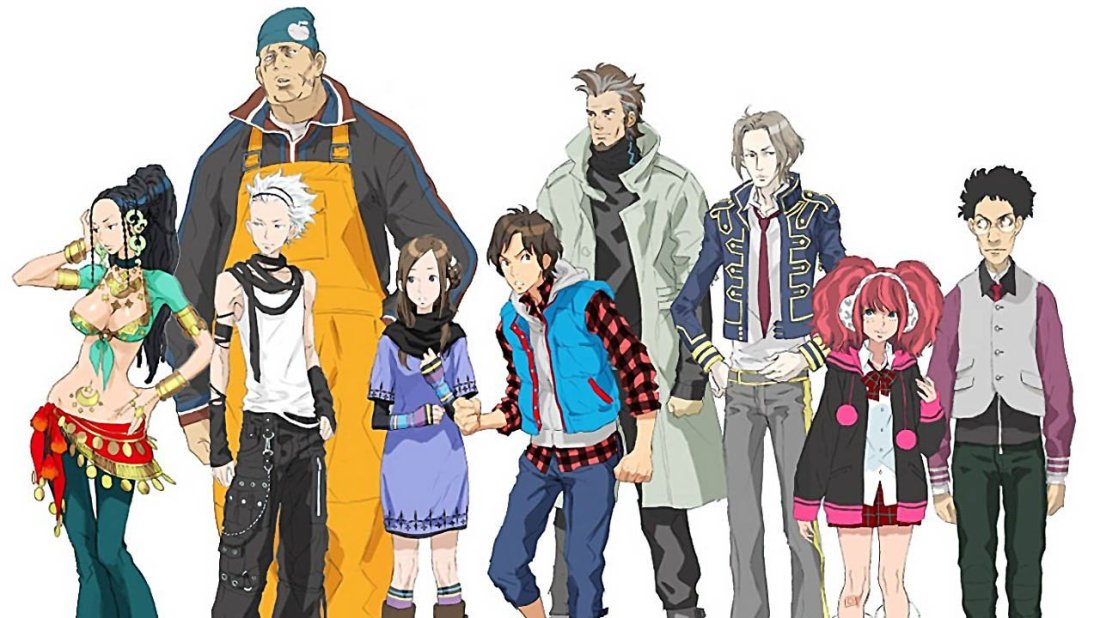
Mixing the visual novel with the escape-the-room genre, 999 is a game that works in ways you would have never imagined. The basic premise suggests something from the most macabre horror movies. Nine characters are locked in a sinking ship and told they must play a deadly game. Explosives have been planted inside their bodies. They can only proceed through doors which require certain combinations related to numbers on their bracelets. When one player races ahead in a mad frenzy and gets himself blown up, their situation becomes clear. Despite sounding like the video game version of Saw II, 999 transcends this to somehow become one of gaming’s most compelling narratives.
The doorways are an ingenious way of including seemingly innocuous choices. Each door has a number from one to nine. To enter a door, the characters must add up their bracelets together to reach that number; if they go above ten, they instead add the digits (so 17 becomes 8 – the game luckily does the math for you). This results in only certain combinations being able to go through each door, with at least three being required. When you first begin and lack a read on any of the characters, whatever door you choose may as well be random. But the deeper you get into the game, the more you realize the need to learn more about certain characters. This, in turn, leaves another set of characters to their own devices in another room.
Unfortunately, the greatness of 999 is buried so deep within that it’s impossible to discuss much more without diving straight into spoiler territory. The escape room puzzles are fine, but this game achieved its greatness through the handling of its narrative – if you are not familiar with where this game is headed and do not want to ruin the experience, I suggest stopping here.
Your first ending will come shockingly early. Most likely, some character will suddenly start picking everyone else off. Naturally, this is very unsatisfying. The game will encourage you to play again, so you try a different path. As you switch up the doors, you will stumble into another ending. Certain elements will click together (…or you’ll consult a guide) and you’ll eventually reach one of the truer endings.
Somehow, neither of these paths are enough on their own; to actually finish this game, you need to learn a password in one and use it in the other. 999 taps into the meta in a very unique way; by playing the game over and over, the protagonist is somehow picking up on these alternate realities. This means, in the default state, survival is impossible by design. This also means all these other endings are semi-canon; they may not happen in the true ending, but Junpei has still experienced those realities. The fact the game ultimately offers an explanation for this is the cherry on top.
Video games have a hard time handling narrative; if it’s too straightforward, it sometimes feels like the game is randomly being interspersed with a movie. Providing alternate progression can shake things up, but finding the balance between excellent writing and true variation is quite difficult. 999 simply decides to have it both ways. What you learn down these stray paths is as key as the final result. This game is loaded with great characters opening up your mind to distinct possibilities, and the individual moments really shine. Strangely, despite being a puzzle game, the most memorable is the easiest thanks to its integration with the narrative.
Alongside the more popular Portal and Bioshock, 999 stands as one of the great late 2000s games which truly questioned what it meant to tell a story in this medium. With a twist that blurs the line between player and character while somehow treating multiple endings as interconnected, 999 offers an unforgettable experience – but its greatest trick is using all these stray elements to keep casting the same characters in different lights.
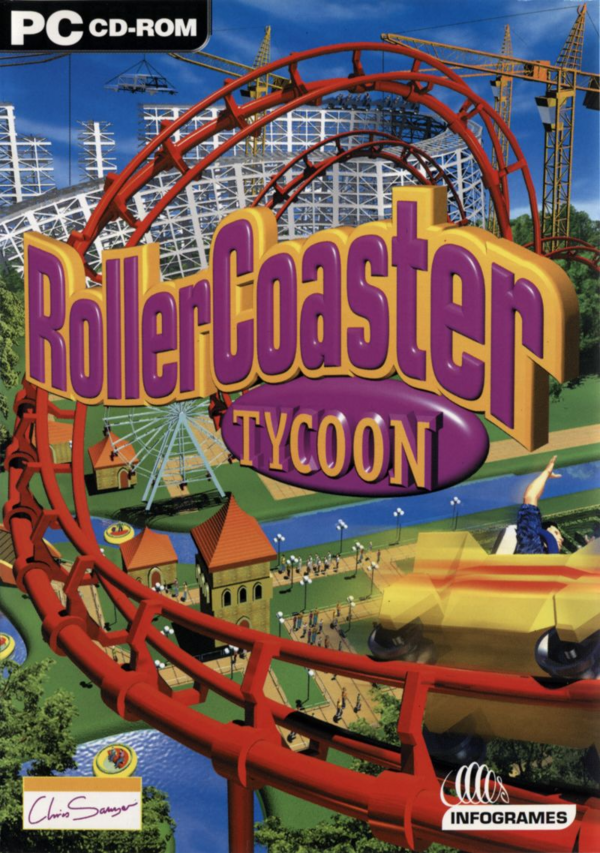
RollerCoaster Tycoon (1999) Developed by Chris Sawyer Productions
Our first exposures to a medium can help shape how we process that medium going forward. Throughout my childhood, there was no game I played more than RollerCoaster Tycoon. I believe this had a strange effect. My attention was drawn to other simulators, but I couldn’t quite wrap my head around SimCity 3000. And while the term existed before, the following years saw an uptick of games with ‘tycoon’ in the title. Even as a child, I was wary of what that meant. While Pokemon had Dragon Quest Monsters to scratch a similar itch, RollerCoaster Tycoon stood alone. This time searching and failing to find something suitably similar must have influenced my current perception of art. I’ve never been one to focus too much on one particular style; I want to get my hands into a little bit of everything. After all, there’s no way of knowing where I’ll find the next game to resonate to such a degree – aside from two being in the same series, my personal top 10 games have little in common.
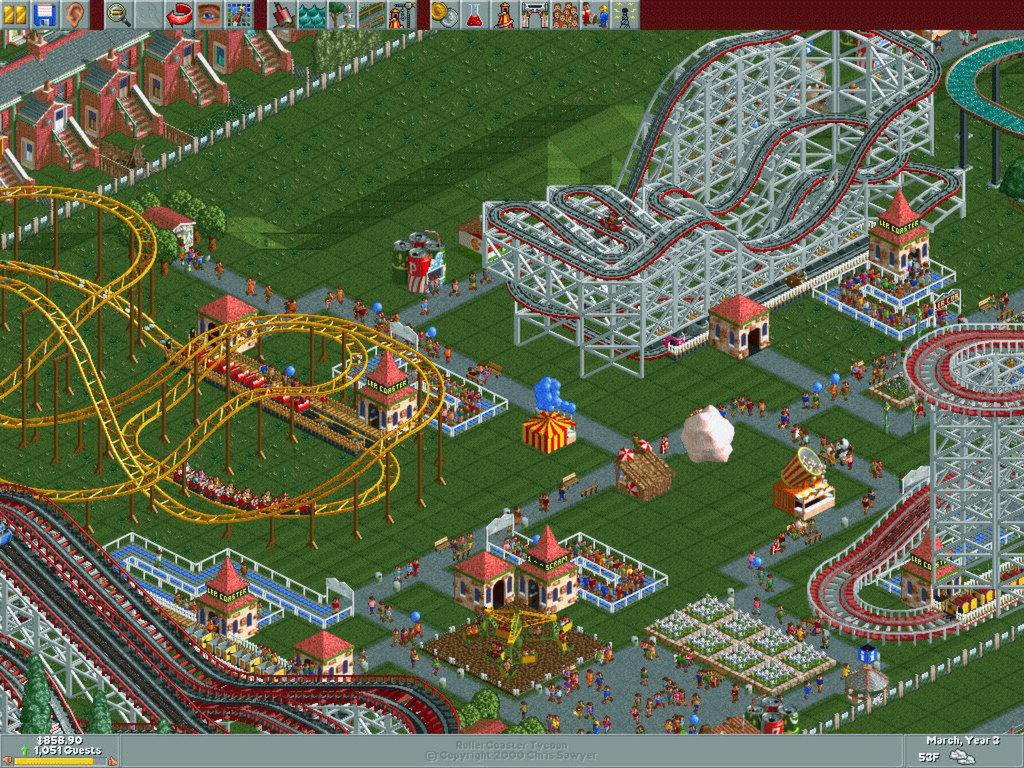
Though not quite an indie game due to being published by Hasbro, RollerCoaster Tycoon certainly operates in a similar manner. The game was almost entirely created by Chris Sawyer, with some help from artist Simon Foster and composer Allister Brimble. Even in 1999, the graphics were archaic, but that lent a simple charm to the experience. In fact, I think the simplicity is part of what makes scrolling over the park so fun. The sense of motion Sawyer managed to create is surprisingly smooth.
The game is straightforward in its purpose; you must run an amusement park for a few years and achieve a certain popularity. There are few bells and whistles in the basic presentation, which in turn draws more attention to your personal creations. The park management is fine enough (if a little too easy as an experienced gamer, though my childhood self never quite got there), but the draw is building bigger and better coasters. The grid-based system makes this a straightforward process with physical constraints being simple to learn; rides must be two solid steps above to pass over one another, getting over a hill requires either enough momentum or a chain, etc. Designing a great coaster requires just the right speed around corners and hills; the simple design makes it easy to pick out and correct the sections which aren’t working.
The park guests give an incentive to make various rides. Some are too afraid for even the most basic coasters, while others live for thrills – within certain limits. Each ride has meters rating their intensity and their tendency to cause both excitement and nausea. Make a death trap and no one will ride it; these restraints are key in enforcing realistic designs.
The different parks which operate as the game’s levels do a nice job of emphasizing various mechanics. First level Forest Frontiers is situated in a narrow clearing, putting an emphasis on more compact rides – but there’s also the option to buy more land for the park. Evergreen Gardens really ramps up the management game. If you’re not paying enough attention, your park rating will dip as its sprawling paths will become a sea of vomit. Penultimate park Rainbow Valley completely prevents landscape changes; there’s always something which sets these parks apart.
RollerCoaster Tycoon is simply a game which handles its concept very well. What the sea of imitators did not understand is that designing rollercoasters is a certain joy which does not really exist elsewhere. The selling point here was the rollercoasters, not the ‘tycoon.’ Which is not to knock on RCT’s management system; these two concepts played into one another, giving the player a reason to care about the quality of their rides beyond simple aesthetic pleasure. This game would have never had the same draw if it was a mere sandbox.






 Fool Fantastic
You must be logged in to post a comment.